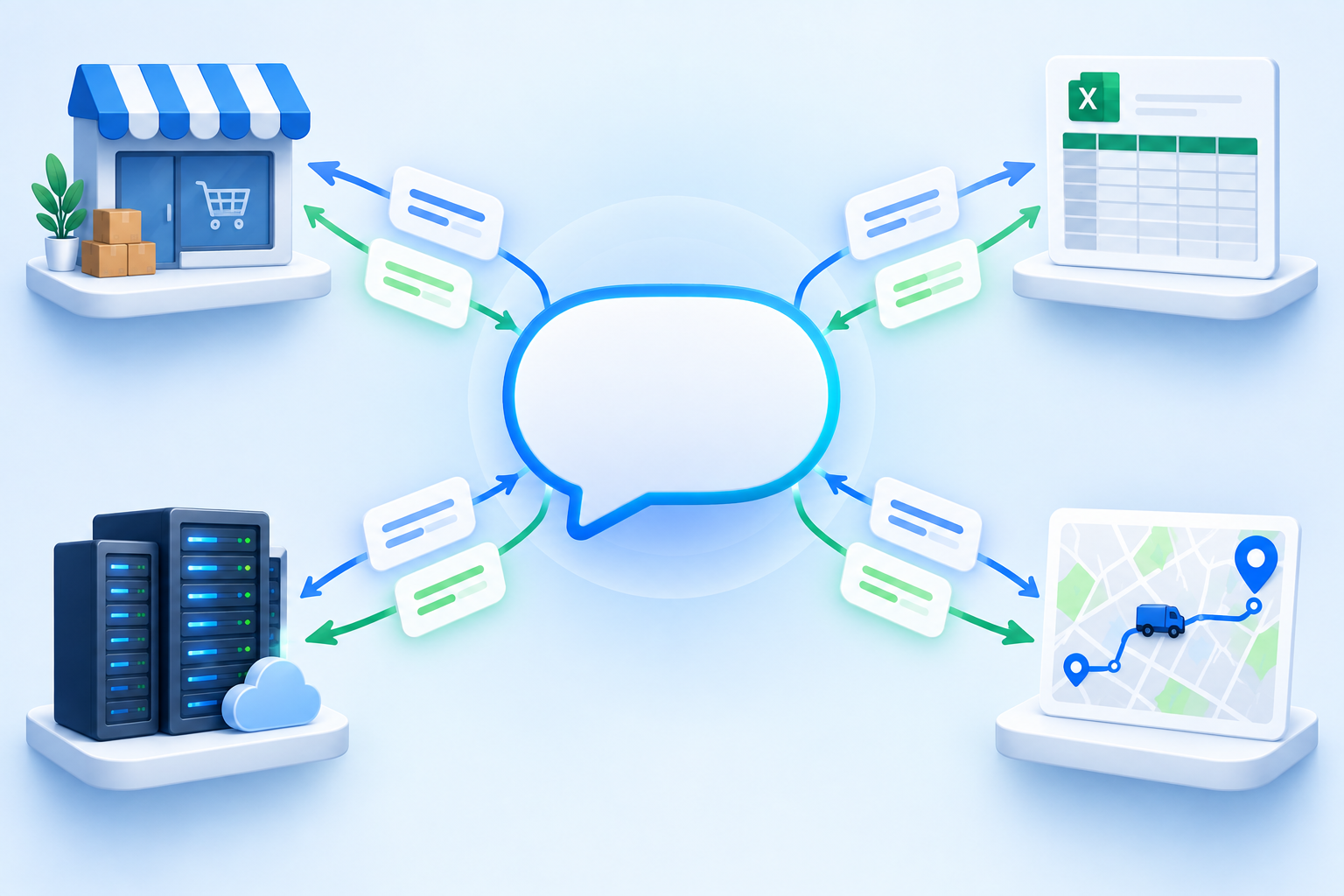
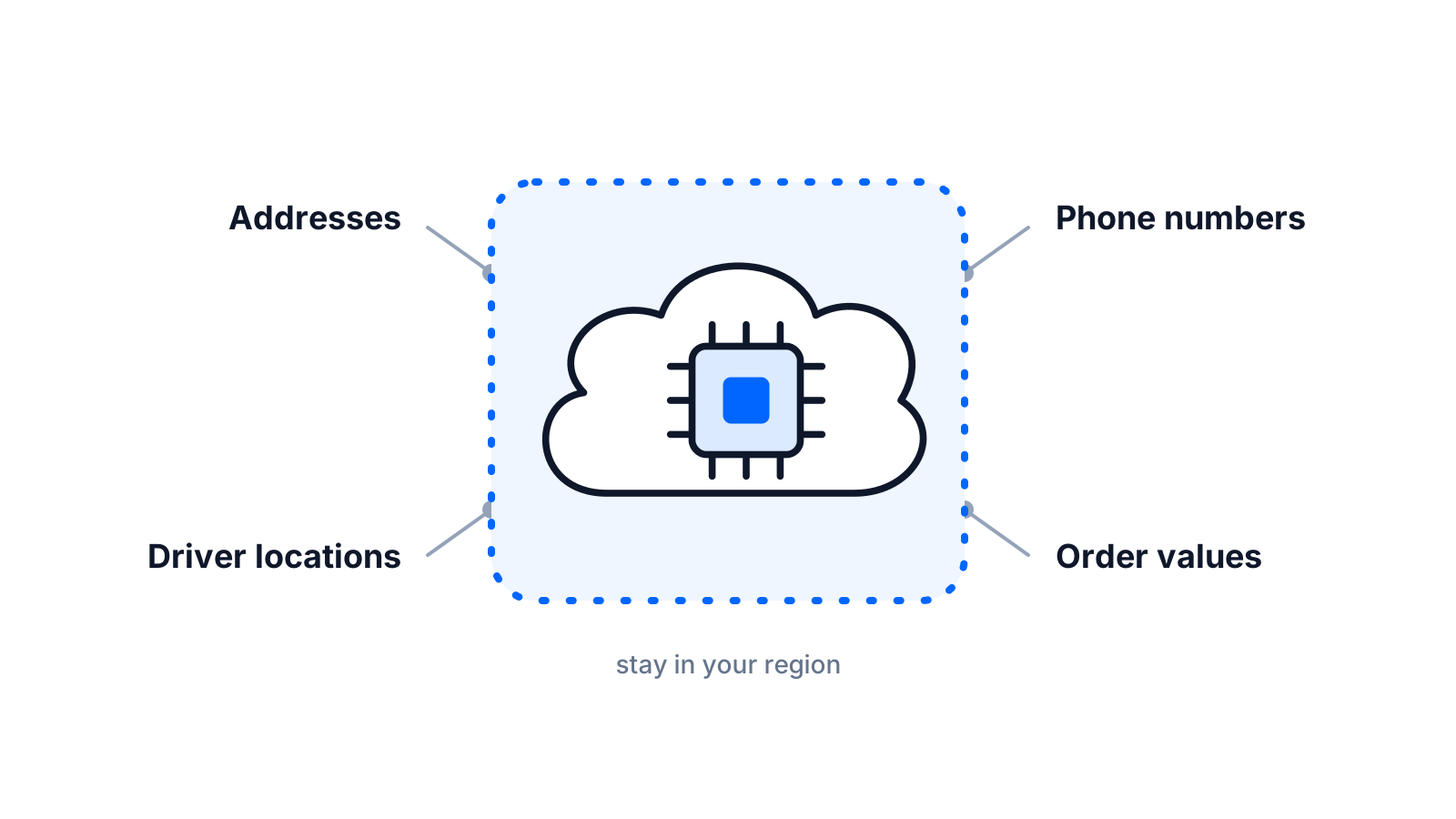
AI data residency is the question of where your data goes when an AI assistant reads it, under whose account it is processed, and in which jurisdiction. For a logistics operation that data is not abstract. It is the delivery address of a patient, the phone number of a customer, the value of a cash-on-delivery order, and the live position of a Captain on shift. Every time a dispatcher asks a copilot which orders are running late, some of that data is sent to a model.
This guide covers what an AI dispatch assistant actually touches, why it matters under GDPR-style regimes, in healthcare deliveries, and in enterprise procurement, how bring-your-own-LLM (BYO-LLM) plus regional provider endpoints keep that data inside the cloud region and account you choose, what to write into a data processing agreement, and the questions to put to any vendor.
What an AI dispatch assistant actually touches
It is tempting to think of AI features as reading only aggregate numbers. In practice, an assistant that can answer operational questions needs identifiers, addresses, and context. The table below lists what a dispatch assistant, an AI agent, or an MCP-driven query typically sees, and why.
| Data element | Where it comes from | Why the model sees it | Sensitivity |
|---|---|---|---|
| Delivery address | Order import, ERP, or Shopify | Address cleanup, route reasoning, late-order questions | Personal data; health context for pharmacy deliveries |
| Customer name and phone | Order record | Drafting notifications, call-first logic | Personal data |
| Order contents and value | OMS, ERP, or storefront | Prioritisation, COD and refund handling | Commercial and personal |
| Captain live location | Driver app GPS | ETA questions, reassignment proposals | Employee personal data |
| Free-text notes | Customers, dispatchers, drivers | Instruction classification, exception reasoning | Unstructured; may contain anything |
| Proof of delivery | Driver app | Dispute and refund questions | Photos, signatures, timestamps |
A well-built platform minimises what it sends on each call, and we cover PII minimisation in our guardrails guide. But an assistant that can answer which orders for a specific customer are late must see at least the identifiers and addresses involved. Residency planning starts by accepting that.
Why AI data residency matters in three settings
GDPR-style regimes
Under GDPR and the growing family of similar laws, a customer address and phone number are personal data. Sending them to a model provider is processing by a sub-processor, and if that provider processes the data outside your region, it is an international transfer with its own paperwork. When your software vendor holds the model account, the vendor picked the sub-processor and the region on your behalf, and you may not be able to name either in a DPIA.
Healthcare and pharmacy deliveries
A delivery address combined with a medication name is health information. Pharmacy and medical-supply operations already carry compliance obligations around cold chain, chain of custody, and patient privacy, which we cover in our pharmacy delivery compliance guide. Adding an AI assistant that reads patient addresses through an unknown account in an unknown region is exactly the kind of gap an auditor finds first. Our pharmacies industry page outlines how Geofleet supports these operations.
Enterprise procurement
Security questionnaires now include a standard block of AI questions: list every AI sub-processor, state the processing region, confirm whether prompts are used for training, and describe retention. A vendor running a shared model account either cannot answer precisely or answers with terms you have no control over. That stalls deals and creates exceptions that have to be re-approved every renewal.
How BYO-LLM keeps delivery data in your region and account
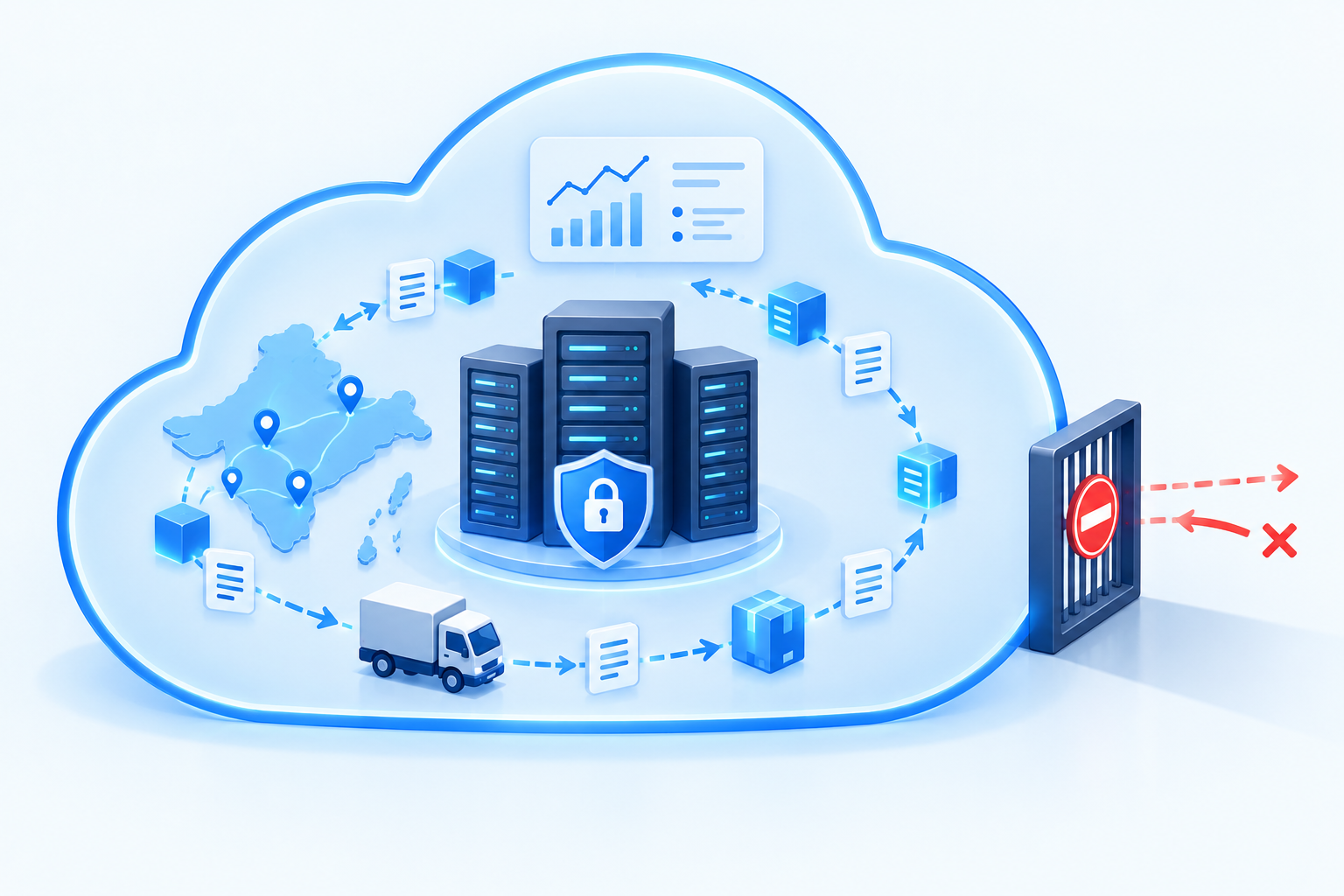
In Geofleet, the LLM model providers section under Settings, Developer, Integrations lets you select a provider and enter your own API key. For Azure OpenAI you also enter the endpoint of a deployment in the Azure region you chose. From then on, prompts generated for your tenant go directly to that endpoint, authenticated as your account. Geofleet does not route them through a shared Geofleet-owned model account.
That single change resolves most residency questions at once, because the provider relationship is now yours. Which region processes the data is decided by the endpoint you configured. What is retained, and for how long, is decided by the settings on your provider account. Whether prompts are used for model training is governed by the agreement you signed with the provider, which for enterprise tiers typically excludes training on customer data (confirm this in your own contract).
- Account: the model provider sees your organisation as the caller, so your enterprise terms apply.
- Region: choose a regional endpoint or deployment and processing stays there. Azure OpenAI offers regional deployments; other providers expose regional processing options where available.
- Retention: prompt and output retention follows the policy on your provider account, not a policy chosen by your software vendor.
- Sub-processor list: shorter and fully known. Geofleet plus the provider you already contract with.
Residency is about the account, not only the data centre
Two deployments in the same region can have very different residency outcomes. One is under your enterprise agreement with your retention settings and your audit access. The other is under someone else’s agreement, with defaults you cannot see. Ask who owns the account before you ask where the servers are.
For teams standardised on Microsoft, running inference in an Azure OpenAI deployment inside the tenant boundary is usually the shortest path to a clean answer. Our Azure OpenAI for logistics guide walks through the setup, quotas, and IT checklist.
What to put in your DPA
A data processing agreement with a logistics software vendor should cover the AI layer explicitly. When you bring your own model provider, some of these clauses move into your agreement with that provider, but they still need to exist somewhere. Use this as a starting list.
- Named sub-processors, including the model provider, and a notification process for changes.
- Processing region for model inference, and a commitment that it will not change without notice.
- A clear statement of which data categories are sent to the model (addresses, phone numbers, notes, locations) and which are excluded.
- No use of your prompts or outputs for model training, and a retention period for both, ideally zero or a short operational window.
- Deletion of stored prompts, outputs, and API keys on termination, with confirmation.
- Access to audit logs of AI tool calls made on your data, including who asked, what was called, and what was returned.
- Breach notification timelines that include incidents at the model provider layer.
Questions to ask any vendor
These questions separate vendors who have thought about AI data residency from those who added a chatbot last quarter. Ask them in writing and keep the answers with the contract.
- Who owns the model provider account that processes my prompts, the vendor or me?
- In which region is inference performed, and can I choose it?
- Exactly which data fields are included in prompts, and can I restrict them?
- Are prompts or outputs retained, for how long, and by whom?
- Are my prompts or outputs used to train or improve any model?
- Can I bring my own provider and key, and can I revoke it without vendor involvement?
- Is every AI tool call logged, and can I export those logs?
"Our security questionnaire had one question that most vendors could not answer: name the AI sub-processor and the region. With our own Azure deployment the answer was our own tenant, our own region, and the review took a week instead of a quarter."
— Compliance lead, pharmacy delivery network
A residency rollout checklist
- Classify the data your dispatch operation holds. Flag health-related, minor-related, and payment-related fields.
- Pick the model provider and region that match your existing cloud and legal footprint.
- Create a dedicated project or deployment for Geofleet at the provider, with retention settings and spend limits applied.
- Enter the provider, endpoint, and key in Geofleet under LLM model providers, then run a test query.
- Update the DPA and sub-processor list to reflect the new arrangement.
- Enable AI features in stages: read-only copilot first, then agents with approval, per the guardrails guide.
- Review provider usage and Geofleet audit logs monthly for the first quarter.
Pair residency with the rest of your security checklist
Model residency is one line in a longer list. Multi-factor authentication for dispatch users, role-based access, and webhook signing matter just as much. Our 12-question delivery software security checklist covers the full set.
Related reading
Frequently asked questions
What is AI data residency?
AI data residency refers to where data is processed when it is sent to an AI model, under which account, and in which legal jurisdiction. For logistics software it covers the delivery addresses, phone numbers, order details, and driver locations that an AI assistant reads to answer questions or take actions.
Does an AI dispatch assistant send customer data to the model provider?
Yes, when it needs that data to answer. Asking which orders for a customer are late requires the assistant to see order identifiers, addresses, and status. Good platforms minimise what is sent per call, but some personal data is inherent to operational questions.
How does bring-your-own-LLM help with data residency?
With BYO-LLM, Geofleet sends prompts for your tenant directly to the model provider and endpoint you configured, using your own API key. The model account, region, retention policy, and contractual terms are yours, rather than belonging to a shared account owned by the software vendor.
Can I keep AI processing inside the EU or another specific region?
Yes, if you choose a provider endpoint or deployment in that region. Azure OpenAI supports regional deployments, and other providers offer regional processing where available. Configure the regional endpoint in the LLM model providers section and inference stays there.
What should a DPA say about AI features in delivery software?
It should name the model provider as a sub-processor, state the processing region, list the data categories sent to the model, exclude training on your data, set retention and deletion terms for prompts and outputs, and give you access to audit logs of AI tool calls.
Is AI data residency relevant for pharmacy or medical deliveries?
Especially so. A patient address combined with a medication name is health information. Processing it through an unknown model account in an unknown region is a compliance gap. Running inference in your own regional deployment with a signed DPA closes it.