In modern logistics operations, multiple systems—such as OMS, POS, and delivery platforms—must work together seamlessly. When these systems are disconnected, it leads to delays, errors, and inefficiencies that impact both operations and customer experience.
Real-time integration ensures that orders, delivery status, and operational data are always synchronized across systems, enabling faster and more accurate delivery operations.
Why Disconnected Systems Create Problems
Without integration, logistics teams rely on manual processes to transfer data between systems, leading to operational challenges.
- Orders arrive late or with incorrect details
- Manual data entry increases the risk of errors
- Teams operate with inconsistent or outdated information
Why Real-Time Sync Matters
Real-time synchronization ensures that all systems reflect the latest operational state, improving efficiency and coordination.
- Orders flow instantly from OMS or POS to the delivery platform
- Drivers receive assignments without delay
- Delivery status updates automatically across systems
- Customers and internal teams access the same real-time data
How OMS & POS Integration Works
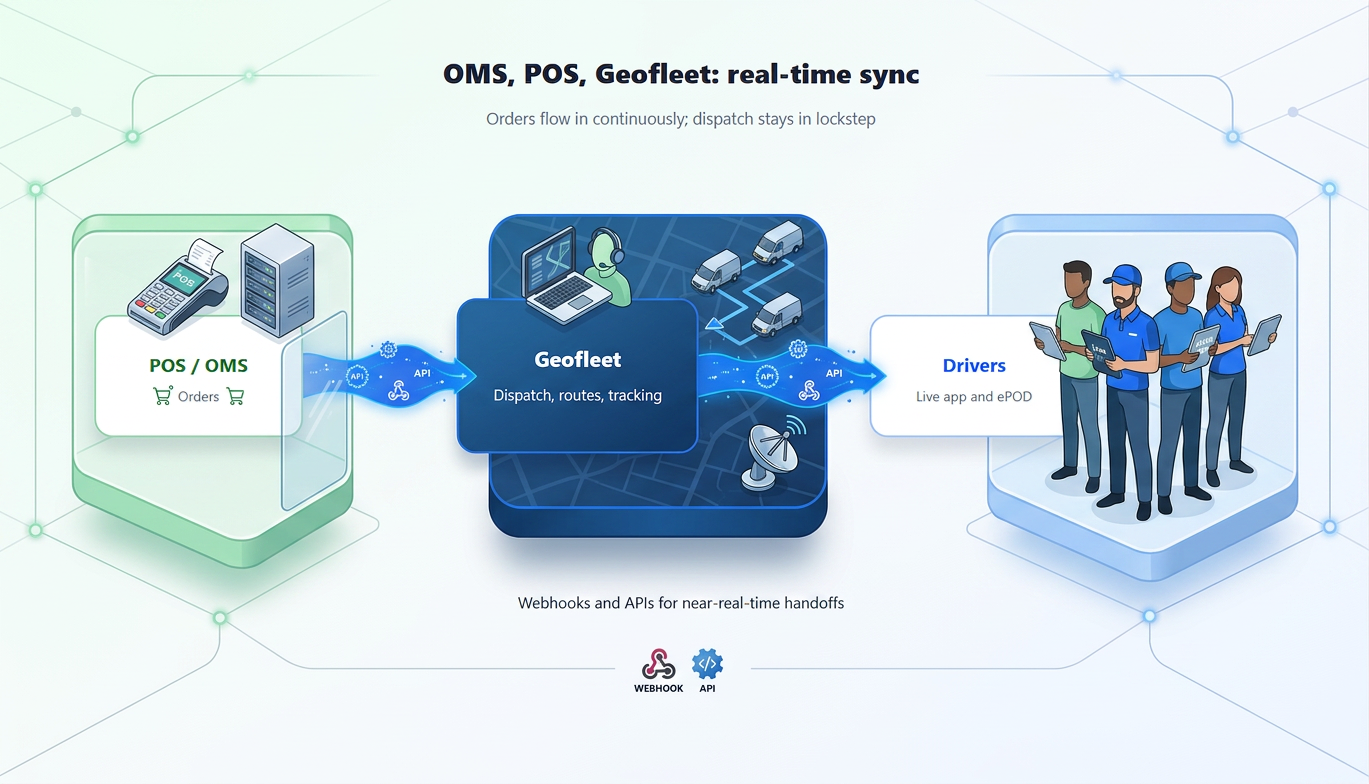
Integration connects systems through APIs or connectors, enabling seamless data exchange between order management, point-of-sale, and delivery platforms.
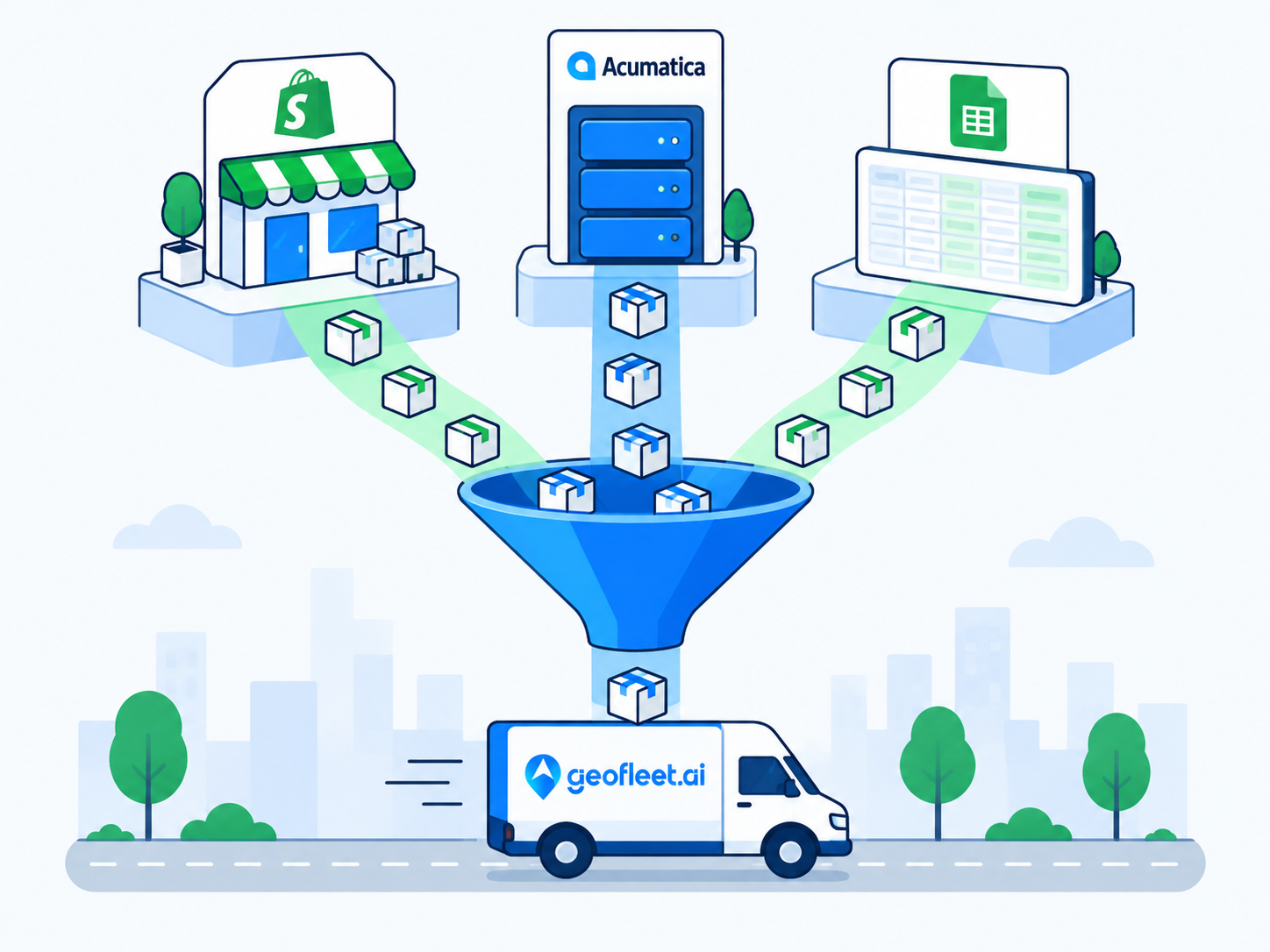
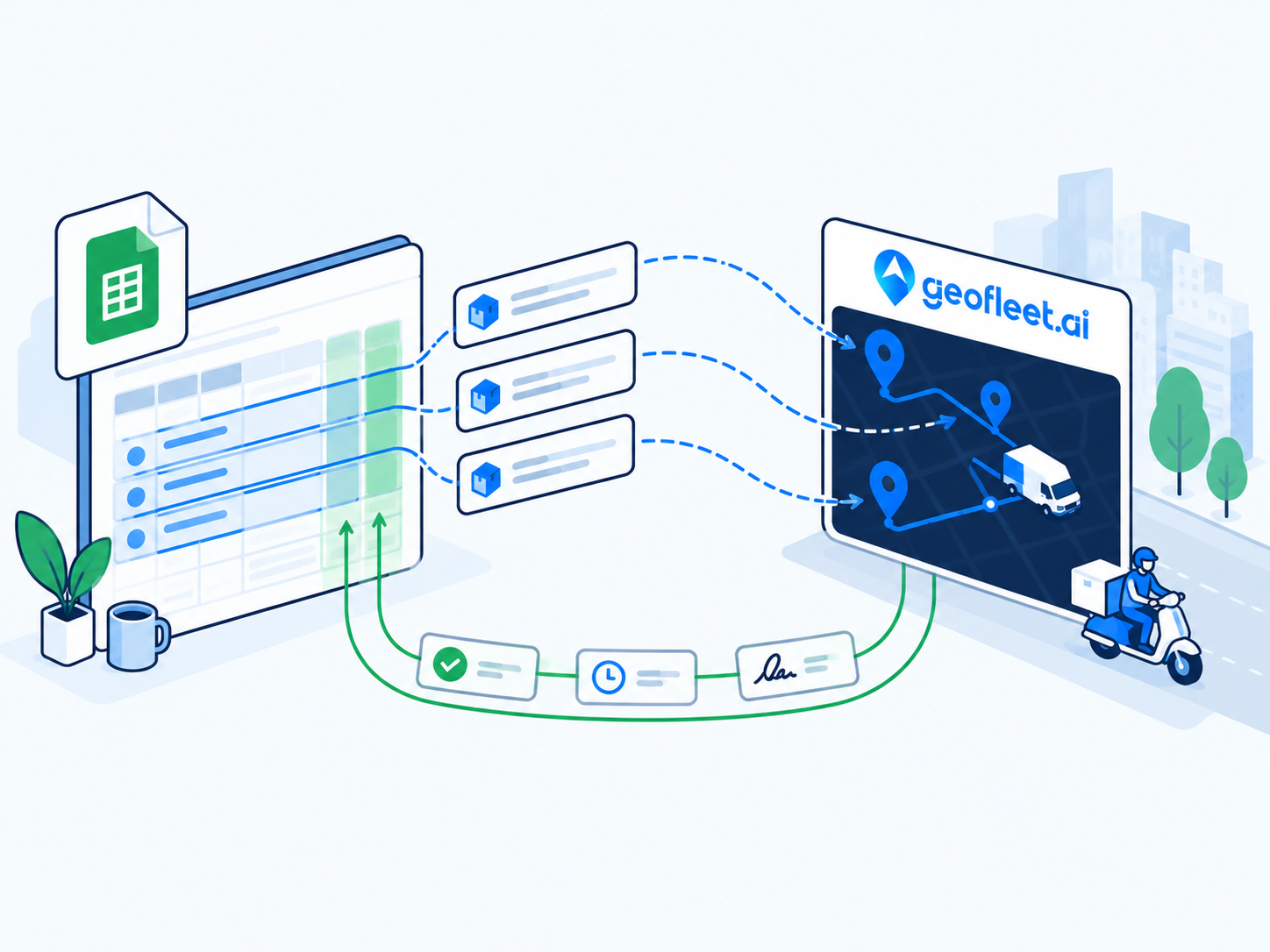
- Orders are created in OMS or POS and sent via API or connectors
- Delivery platform receives orders and performs routing and dispatch
- Driver updates and delivery events are tracked in real time
- Status updates are sent back to OMS/POS systems automatically
- Proof of delivery is linked to each order for verification
Bidirectional sync is the whole point
One-way order push is not integration. Real value comes when delivery status flows back to the OMS and POS automatically, so support, finance, and the customer all see the same live truth.
OMS vs POS Integration: Key Differences
While both OMS and POS integrations serve similar purposes, they operate in different contexts within the delivery ecosystem. The table clarifies where each fits and what they share.
| Aspect | OMS integration | POS integration |
|---|---|---|
| Order origin | Web, app, marketplaces | In-store, restaurant |
| Channels | Multi-channel | Single location flow |
| Order creation | Yes | Yes |
| Status sync back | Required | Required |
| Typical user | E-commerce, D2C | Retail, QSR |
- OMS integration → handles multi-channel orders from websites, apps, and marketplaces
- POS integration → manages in-store or restaurant order flow
- Both systems should support order creation, updates, and cancellations
- Both systems should receive real-time delivery status updates
Integration Options
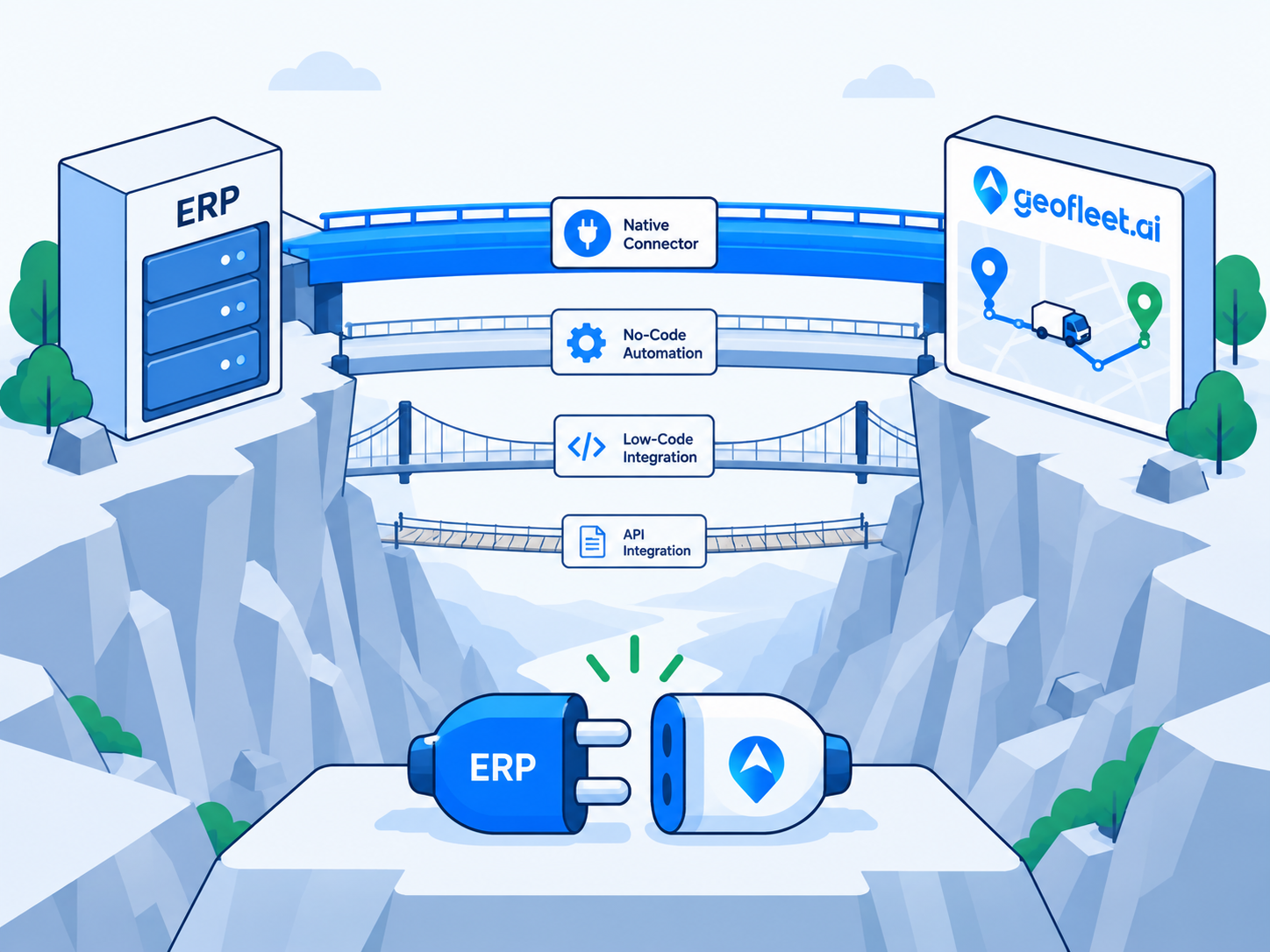
Businesses can choose different integration approaches based on their technical capabilities and operational requirements.
- Pre-built connectors for faster and easier setup
- Custom API integrations for advanced workflows
- Defined data formats and status mapping for consistency
- Bidirectional sync to ensure systems remain aligned
Common Integration Challenges
While integrations provide significant benefits, they require careful implementation to avoid issues.
- Data mismatches between systems
- Delayed updates due to poor synchronization logic
- Lack of standardization in status mapping
- Handling edge cases like order cancellations or changes
How to Get Started with Integration
Implementing real-time integration requires a structured approach to ensure reliability and scalability.
- Enable automatic order sync from OMS/POS to delivery platform
- Validate order data such as addresses and time windows
- Enable real-time status updates back to source systems
- Support order updates, cancellations, and exceptions
- Continuously monitor and optimize integration performance
Business Impact of Real-Time Integration
Well-integrated systems significantly improve operational efficiency and customer experience.
- Reduced manual effort and operational overhead
- Faster order processing and dispatch
- Improved delivery accuracy and fewer errors
- Better customer experience with real-time updates
"After integrating our OMS with delivery, orders and status updates became automatic. We eliminated manual work completely."
— IT and operations lead, D2C brand
A well-integrated delivery system ensures faster operations, fewer errors, and a seamless customer experience—making it essential for scaling logistics operations.
Related reading
Frequently asked questions
What is the difference between OMS and POS integration?
OMS integration handles multi-channel orders from websites, apps, and marketplaces, while POS integration manages in-store or restaurant order flow. Both should support order creation, updates, and real-time status sync.
Why is bidirectional sync important?
Orders must flow into the delivery system, and delivery status updates must flow back to OMS and POS systems, so every team works from a single, accurate source of truth.
What are common integration challenges?
Typical issues include data mismatches between systems, delayed updates from poor sync logic, inconsistent status mapping, and handling edge cases like order cancellations or changes.
How do I get started with integration?
Enable automatic order sync from OMS/POS to your delivery platform, validate order data like addresses and time windows, enable status updates back to source systems, and monitor performance continuously.
Should I use a pre-built connector or a custom API integration?
Use a pre-built connector when one exists for your system, it is faster and easier to maintain. Reserve custom API work for non-standard workflows the connector cannot cover.
How do I avoid duplicate or mismatched orders?
Define consistent status mapping and a single source of truth for order data, validate fields like address and time window on intake, and handle cancellations and edits explicitly so systems stay aligned.