Most “AI in logistics” tools today still rely heavily on manual workflows. They provide dashboards, insights, and recommendations, but execution is left to human operators. Agentic AI changes this model by observing operations, taking actions, and adapting in real time.
This guide covers what agentic AI actually means, the last-mile workflows where it delivers value first, and a phased rollout plan that keeps your team in control.
Why Manual Operations Break
Manual logistics operations struggle to keep up with the complexity of modern delivery networks. As scale increases, the number of decisions required grows exponentially.
- High volume of orders and operational exceptions
- Constant changes in routes, traffic, and delivery constraints
- Dependence on human decision-making for every action
- Inconsistent performance across hubs and regions
Why the Last Mile Is Hardest
The pressure is highest in last-mile delivery, where drivers, routes, customers, and real-world conditions all have to be coordinated at once. Traffic variability, customers who are not home or cannot be reached, and frequent order changes and cancellations mean a plan made in the morning is out of date within hours. Even small disruptions cascade across the network.
Why the last mile dominates cost
The final leg of delivery is the most expensive and least predictable part of the journey. Small inefficiencies, such as a missed delivery window, a failed first attempt, or an avoidable reroute, compound across thousands of stops, which is exactly where real-time automation pays back fastest.
What Agentic AI Means
Agentic AI refers to systems that can independently observe, decide, and act within logistics operations based on defined goals and real-time data.
- Analyzes real-time logistics and operational data
- Takes actions based on rules, constraints, and optimization goals
- Adapts continuously to changing conditions
- Works alongside human operators instead of replacing them
Agents vs Traditional Automation
Traditional automation relies on fixed workflows, while agentic systems are dynamic and context-aware.
- Traditional: fixed rules and predefined workflows
- Agentic: dynamic decisions based on real-time state
- Human-in-loop: approval layers for critical or high-risk actions
| Attribute | Dashboards | Traditional automation | Agentic AI |
|---|---|---|---|
| What it does | Shows data | Runs fixed rules | Observes, decides, acts |
| Adapts to live conditions | No | Within preset rules | Continuously |
| Who executes | Human | Predefined script | Agent, with human oversight |
| Handles novel exceptions | No | Poorly | Yes, within guardrails |
| Scales with volume | Adds workload | Partially | Yes |
Where Agentic AI Works: Key Last-Mile Workflows
Agentic AI can be applied across many logistics functions, but it earns its keep fastest in the repetitive, time-sensitive decisions of last-mile delivery. These are the workflows where agents replace manual coordination.
Order Assignment
Agents assign orders to drivers or carriers automatically based on capacity, proximity, and time windows, instead of a dispatcher matching them one by one.
Dynamic Routing
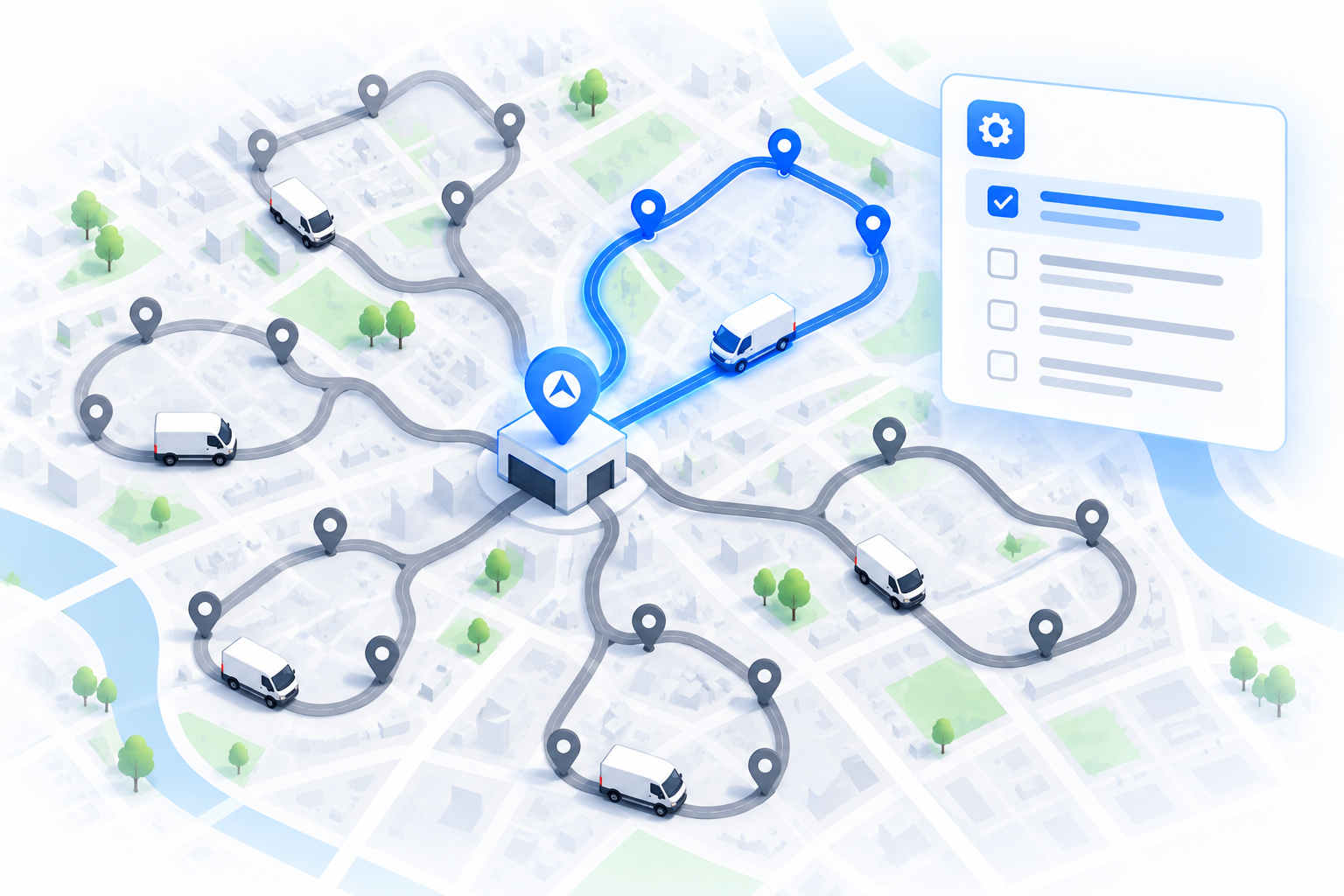
Routes are no longer fixed at the start of the day. AI agents continuously adjust routes based on traffic conditions, delivery progress, and new orders, keeping efficiency high throughout execution rather than just at dispatch.
Predictive ETA & Customer Communication
AI systems calculate ETAs using real-time data and predictive models. Customers receive proactive updates before delays occur, improving delivery success rates and reducing support queries.
Automated Exception Handling
When issues arise, such as delays, cancellations, or driver deviations, AI agents detect them early and recommend or execute corrective actions, with proactive SLA-breach alerts for anything that needs a human. This minimizes disruption and keeps operations on track.
| Stage | Static system | AI agent-driven |
|---|---|---|
| Routing | Fixed at dispatch | Continuously re-optimized |
| Assignment | Manual or rules-based | Capacity and proximity aware |
| ETAs | Estimated once | Predictive, updated live |
| Customer comms | Reactive | Proactive before delays |
| Exceptions | Found after the fact | Detected and resolved early |
| Scaling | More dispatchers | Higher volume, flat headcount |
Business Benefits of Agentic AI
By automating decision-making and execution, agentic AI delivers measurable operational and financial benefits.
- Lower cost per delivery through optimized resource usage
- Improved on-time delivery performance and SLA adherence
- Fewer failed deliveries and re-attempts
- Reduced manual workload for dispatch and operations teams
- Better scalability across multiple hubs and delivery networks
Where the leverage is
In most operations, a small share of repetitive decisions (assignment, rerouting, status updates) consumes the majority of dispatcher time. Automating that share first delivers the bulk of the efficiency gain while humans keep handling the genuinely complex exceptions.
How to Evaluate Agentic AI for Your Operation
Adopting agentic AI is less about the model and more about governance and fit. The questions below help separate a genuine agentic system from a dashboard with an AI label, and ensure you can trust it with real decisions.
- Can it run in advisory mode first, so agents suggest before they act?
- Are guardrails and approval thresholds configurable per action type and risk level?
- Is every agent decision logged and auditable for review?
- Does it act on live operational data, or only on periodic snapshots?
- What baseline data does it need to start, and how does it improve over time?
Key Foundations for Autonomous Logistics
Agents can only make good decisions on good inputs. Before automating anything, make sure these foundations are in place.
- Clean and structured order and delivery data
- Real-time driver tracking and location visibility
- Clearly defined policies, constraints, and SLAs
Step-by-Step Rollout Strategy
You do not need to automate everything at once. The most successful rollouts start with the workflow that drains the most dispatcher time today, usually assignment or rerouting, prove the gain, and expand in phases to keep risk low.
- Start in advisory (shadow) mode, where AI suggests actions but humans approve and execute them. This builds trust, surfaces edge cases, and creates a clean audit trail.
- Pilot automation in a single region, hub, or delivery segment with your real order volume, including a peak day.
- Gradually expand automation across workflows such as routing, allocation, predictive ETAs, customer comms, and exception handling.
- Continuously monitor performance and refine system behavior.
| Phase | Automation level | Operational risk | What to measure |
|---|---|---|---|
| 1. Advisory | AI suggests, humans execute | Minimal | Suggestion quality, acceptance rate |
| 2. Pilot | Auto-execute in one hub | Contained | On-time rate, dispatcher hours saved |
| 3. Expand | Auto-execute across workflows | Managed | Cost per delivery, SLA adherence |
| 4. Scale | Default automation, exceptions to humans | Governed | Volume per dispatcher, first-attempt success |
Why phased rollout works
Limiting the first auto-execute phase to a single hub or segment keeps risk contained while producing a real performance baseline. Teams that pilot narrowly almost always expand faster than those that attempt a full cutover.
Success Metrics for Autonomous Operations
Tie each phase to a few operational metrics measured against your pre-automation baseline. If they move in the right direction without adding headcount, the case for expanding automation makes itself.
- Cost per delivery and overall operational efficiency
- On-time delivery rate and SLA adherence
- First-attempt delivery success rate
- Reduction in manual effort and dispatcher workload
Common Challenges and How to Overcome Them
Moving to agent-driven operations comes with challenges, but each has a practical answer.
- Data quality issues → Start with high-quality lanes and improve gradually
- Resistance to automation → Use advisory mode to build trust
- Operational risk → Roll out in controlled environments first
- Integration complexity → Choose platforms with unified capabilities
Address the people side early
The hardest part of automation is rarely technical. It is trust. Bringing dispatchers in during advisory mode, showing them why the system proposed each action, and letting them override freely turns potential resistance into the fastest path to adoption.
How Geofleet Fits into Agentic Logistics
Geofleet combines AI-driven decision-making with real-time execution and visibility, so AI agents handle routine operational decisions while your team focuses on strategy and the exceptions that need judgment. The full AI agent suite is part of the Enterprise plan.
- AI-driven allocation and intelligent routing
- Real-time monitoring with proactive alerts
- Predictive ETAs and dynamic re-routing
- Human-in-the-loop controls and a unified control tower for operations
Keep reading
Frequently asked questions
What is agentic AI in logistics?
Agentic AI in logistics refers to systems that observe operations and take actions such as routing, dispatch, and allocation automatically instead of just providing insights.
How is it different from traditional routing tools?
Traditional tools create static plans before execution, while agentic AI continuously adapts routes and decisions in real time based on changing conditions.
How is agentic AI different from traditional automation?
Traditional automation runs fixed rules and predefined workflows. Agentic AI makes context-aware decisions based on the live state of operations and adapts as conditions change, while still operating within configured guardrails.
Is agentic AI safe for real-world logistics operations?
Yes, agentic systems operate with guardrails and allow human approval for critical decisions, ensuring both automation and control.
Will AI replace dispatchers?
No. AI agents handle repetitive operational decisions such as assignment and rerouting, while human dispatchers focus on strategic planning and complex exceptions.
How do AI agents reduce failed deliveries?
Agents calculate predictive ETAs and notify customers before delays occur, reroute around disruptions in real time, and flag access or availability issues early, reducing missed windows and costly redelivery attempts.
What if my logistics data is messy?
You do not need perfect data to start. Begin with your highest-quality lanes or regions, using structured operational data such as addresses, time windows, and driver locations, and improve data quality as automation expands.
What is the safest way to roll out agentic AI?
Start in advisory mode so agents recommend actions for humans to approve, pilot in a single hub or region, then expand automation to higher-volume decisions as confidence and audit history build up.
How fast is ROI?
Because the rollout starts with a narrow pilot measured against a baseline, you can see whether cost per delivery, on-time rate, and dispatcher hours are moving within the pilot itself. Many teams see measurable improvements within a few weeks of starting a pilot.