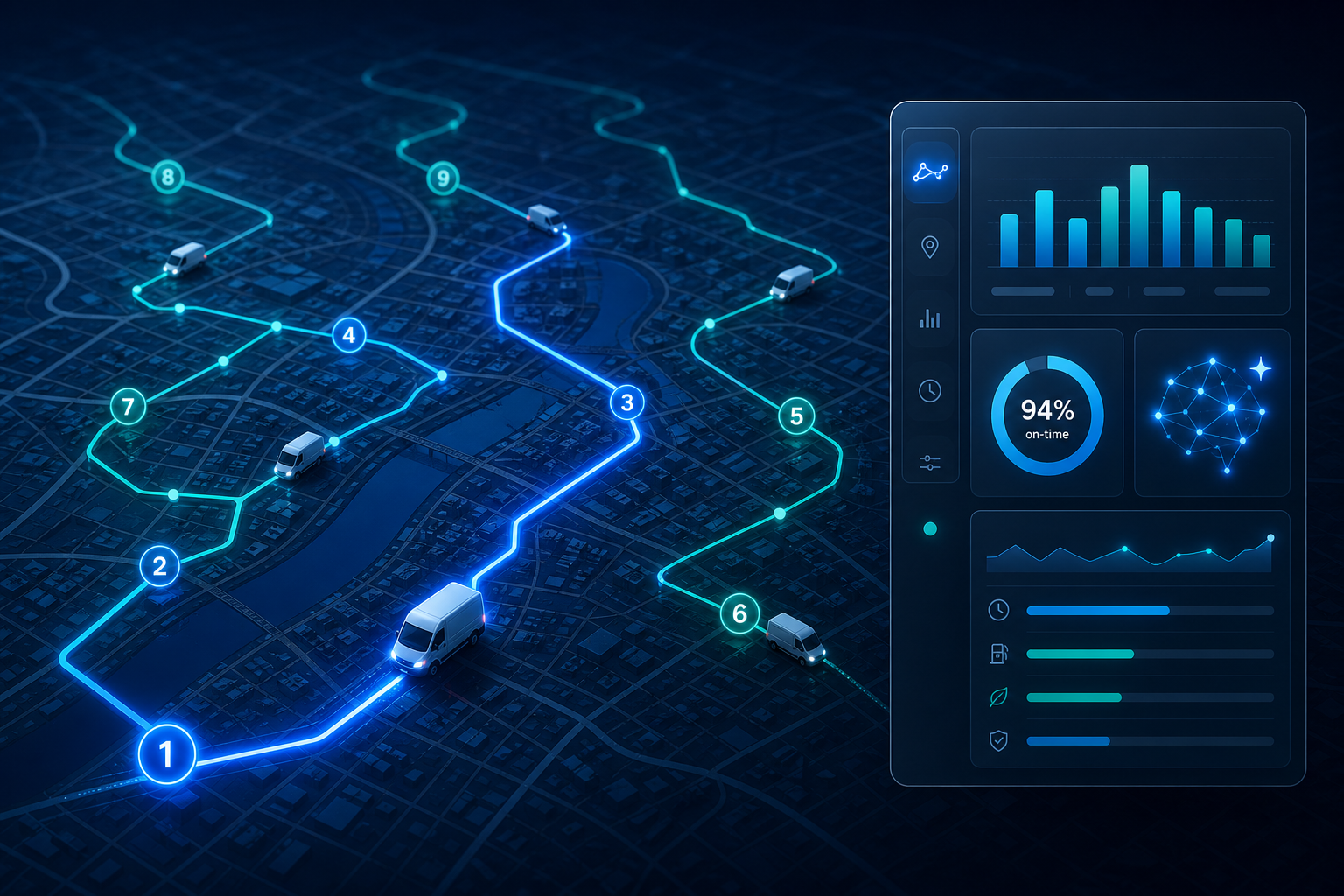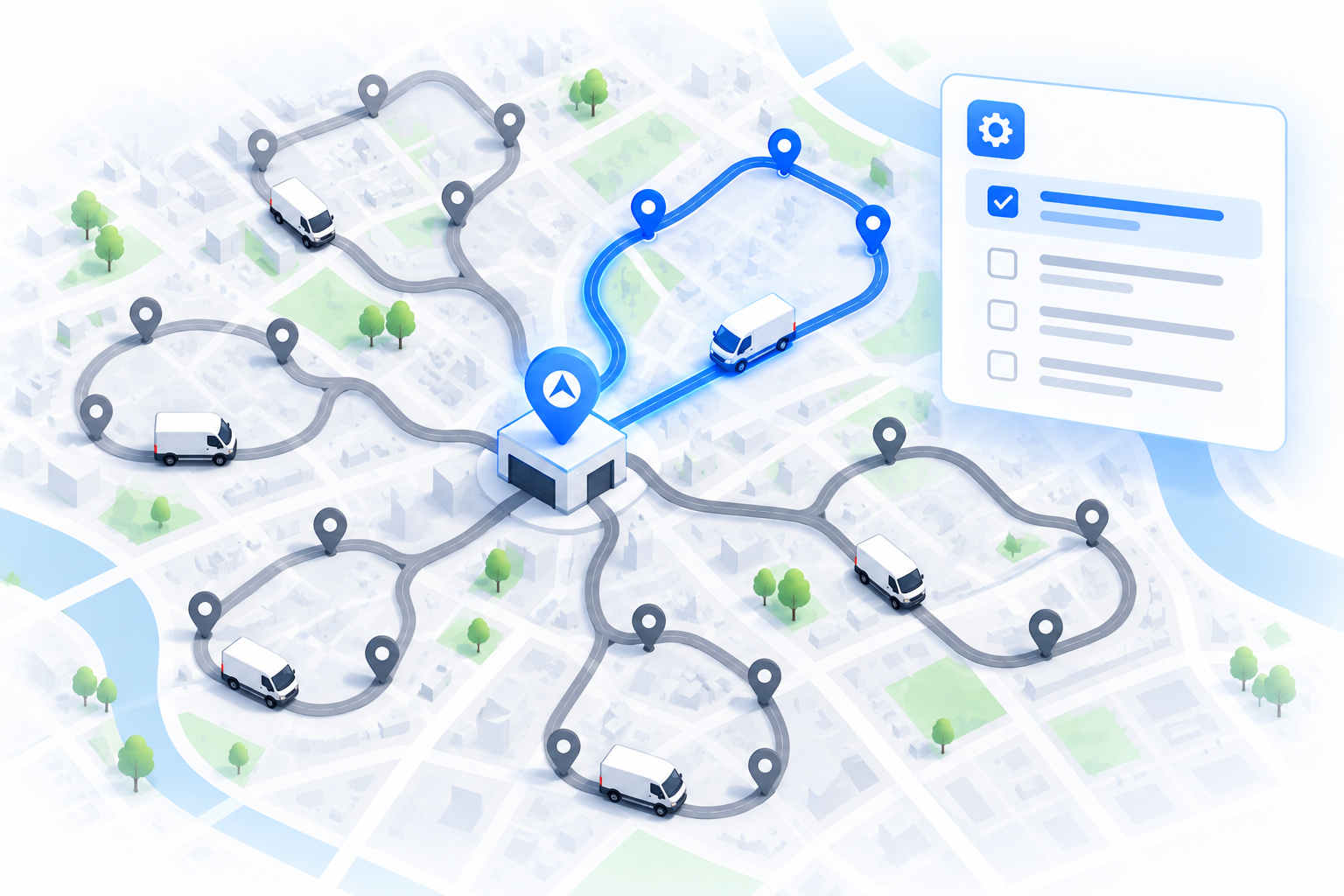
Modern delivery operations operate in highly dynamic environments where demand, traffic, and customer expectations are constantly changing. Relying on a single routing strategy is often not enough to maintain efficiency and service quality.
Choosing the right routing model—static, zone-based, or dynamic—plays a critical role in optimizing delivery performance, controlling costs, and scaling operations effectively.
Why Routing Strategy Matters
Logistics operations today face increasing complexity, making routing decisions more critical than ever. The routing model you choose quietly governs your cost per delivery, your on-time performance, and how easily you can absorb a demand spike. A model that fits a 20-stop-per-day operation can fall apart at 200 stops, and a model built for chaos can add needless overhead to a predictable milk run.
- Demand is unpredictable and varies across regions and time
- Customers expect faster and more reliable deliveries
- Operational costs continue to rise due to inefficiencies
- Fuel, labor, and vehicle utilization are all downstream of routing quality
Routing quality compounds
The share of last-mile cost typically tied to routing efficiency. In many deployments, teams reclaim a meaningful slice of this simply by matching the right model to the right segment of their network.
Key Routing Models Explained
Static Routing
Static routing uses predefined routes that remain consistent over time. It is commonly used in operations with stable demand and predictable delivery patterns.
- Fixed routes assigned to drivers or vehicles
- Minimal need for daily optimization
- Simple to implement and manage
However, static routing lacks flexibility and may lead to inefficiencies when conditions change.
Zone-Based Routing
Zone-based routing divides delivery areas into specific territories. Drivers operate within assigned zones, improving familiarity and operational control.
- Structured territories for better control
- Moderate flexibility within zones
- Improved scalability for growing operations
This model balances efficiency and flexibility but may still require optimization within zones.
Dynamic Routing
Dynamic routing uses real-time data to continuously optimize routes during execution. It adapts to traffic, delays, and changing demand conditions.
- Real-time route optimization and adjustments
- High responsiveness to operational changes
- Maximizes efficiency and resource utilization
While highly effective, dynamic routing requires strong data infrastructure and system integration.
The most advanced form of dynamic routing is agent-based routing. Rather than re-running a batch optimizer on request, an AI agent monitors live conditions and makes routing decisions continuously, and it connects directly to dispatch, allocation, and customer communication. The table below shows how it differs from traditional pre-dispatch route planning.
| Dimension | Traditional routing | Agent-based routing |
|---|---|---|
| When it plans | Once, before dispatch | Continuously, during execution |
| Inputs | Fixed at plan time | Live traffic, delays, new orders |
| Disruption response | Manual re-plan | Automatic adjustment |
| Best volume | Low to moderate | High and dynamic |
| Execution role | Hands off after plan | Drives dispatch and reroutes |
| Scaling | Adds coordination work | Scales with automation |
The core distinction
Traditional routing answers "what is the best plan?" once. Agent-based routing keeps answering "what is the best decision right now?" as conditions change. The gap between those two questions widens with every increase in volume and variability.
Match the model to the volatility
The single most reliable rule of thumb: the more your demand, traffic, and order mix change hour to hour, the more dynamic your routing should be. Stable patterns reward simplicity; volatile patterns reward real-time optimization.
Model Comparison
Each routing model offers different trade-offs between simplicity, control, and flexibility. The table below summarizes how they compare across the dimensions operations leaders weigh most when choosing an approach.
| Criteria | Static | Zone-based | Dynamic |
|---|---|---|---|
| Flexibility | Low | Medium | High |
| Planning effort | Low (set once) | Medium | Low (automated) |
| Data requirements | Minimal | Moderate | High (real-time) |
| Driver familiarity | High | High | Variable |
| Scales with volume | Poorly | Well | Very well |
| Best for | Stable demand | Defined territories | Volatile demand |
- Static routing → Simple and predictable but inflexible
- Zone-based routing → Balanced approach with structured flexibility
- Dynamic routing → Highly efficient but requires advanced systems
Where Each Routing Model Fits Best
Different industries and delivery models require different routing strategies based on operational needs.
- FMCG → Mix of static and dynamic routing depending on demand variability
- Food and cold chain → Dynamic routing for strict time and temperature constraints
- Courier (CEP) → Hybrid of zone-based and dynamic routing
- 3PL logistics → Combination based on contracts and demand patterns
- On-demand delivery → Zone-based routing with dynamic optimization
The Reality: Hybrid Routing Strategy
In practice, most logistics operations combine multiple routing models to achieve the best results. A hybrid approach allows businesses to optimize different parts of their network based on specific needs.
- Use static routes for predictable and repeatable demand
- Apply zone-based routing for operational structure and control
- Use dynamic routing where flexibility and responsiveness are required
Hybrid also works across time, not just across territories. Batch optimization produces an efficient plan before dispatch, and agent-based routing adjusts that plan in real time once drivers are on the road. You get efficient planning and flexible execution, which is why this layered model scales best for growing operations.
Default to hybrid
Batch optimization gives you an efficient starting plan; agent-based routing protects that efficiency once reality intervenes. If you are unsure which you need, choose a platform that does both so you are not re-buying when volume grows.
Key Questions to Choose the Right Model
Selecting the right routing strategy requires evaluating your operational requirements and constraints.
- Does your current routing match demand patterns?
- Where are inefficiencies caused by outdated routes?
- Which parts of your network require more flexibility?
- Do you have the data infrastructure to support dynamic routing?
To put numbers behind those questions, work through this checklist. It shows how far toward dynamic, agent-based execution your network should lean.
- Estimate your daily exception rate (reroutes, reassignments, failed attempts) as a share of stops. The higher it is, the more a static plan will drift.
- Decide how time-sensitive your promises are: scheduled next-day tolerates static plans; same-day does not.
- Map how many systems must react to a change (dispatch, driver app, customer comms).
- Choose a platform that supports both batch optimization and real-time adjustment.
- Pilot with real volume on a peak day and compare plan adherence to actual outcomes.
How to Get Started with Routing Optimization
Move to a more advanced routing model in stages. Start with one region, hub, or delivery segment, measure the results against your current routes, and scale once the gains hold. We cover the full migration from fixed routes to dynamic dispatch, week by week, in a separate guide.
Migrating from static to dynamic routing
A well-designed hybrid routing strategy provides the best balance of efficiency, cost control, and service quality in modern logistics operations.
Related reading
Frequently asked questions
What is the difference between static and dynamic routing?
Static routing uses fixed, predefined routes that stay the same over time, making it simple but inflexible. Dynamic routing uses real-time data to continuously adjust routes based on traffic, demand, and disruptions, delivering higher efficiency in changing conditions.
When should I use zone-based routing?
Zone-based routing works best when you want structured territories and operational control without fully relying on real-time optimization. It improves driver familiarity and scales well for growing operations.
Can I combine multiple routing models?
Yes. Most logistics operations use a hybrid strategy, applying static routes for predictable demand, zone-based routing for structure, and dynamic routing where flexibility is needed.
What do I need to support dynamic routing?
Dynamic routing requires reliable real-time data and system integration, including live driver location, traffic inputs, and a platform that can recalculate routes on the fly.
Is dynamic routing always better than static routing?
No. Dynamic routing adds the most value when conditions change frequently. For stable, repeatable runs, static or zone-based routing is often simpler and just as effective at lower operational overhead.
How do I migrate from static to dynamic routing without disruption?
Pilot the new model on one region or hub, compare it against your current routes, and expand only once the results hold. Our 30-day static-to-dynamic transition plan (linked in the article) walks through the migration week by week.
Will drivers resist dynamic routing changes?
Some pushback is normal at first, especially from drivers who know their fixed routes well. Clear communication about why routes change, a driver app that surfaces updates simply, and keeping zone boundaries stable where possible usually make the transition smooth.
Is agent-based routing auditable?
It should be. Before you adopt a dynamic or agent-based routing system, check that every automated reroute and reassignment is logged with what changed and why, so your team can review decisions and keep full operational transparency.