Fleet operations become exponentially more complex as delivery volumes grow. Managing multiple drivers, tracking deliveries, and responding to real-time issues without proper visibility often leads to delays, inefficiencies, and operational confusion. Teams are forced to rely on manual updates, phone calls, and fragmented systems, which slows down decision-making and increases the risk of errors.
In such environments, the lack of visibility is not just an inconvenience—it is a critical limitation. Dispatchers cannot see where drivers are, support teams lack accurate delivery status, and managers struggle to identify performance issues. This results in reactive operations, where problems are addressed only after they escalate.
- No real-time tracking of driver location or movement.
- Unclear or outdated order status across systems.
- Delayed detection of issues such as missed deliveries or route deviations.
- Limited ability to make proactive decisions.
A fleet control tower solves these challenges by providing a centralized, real-time view of all operations—transforming how teams monitor, manage, and optimize delivery performance.
What a Fleet Control Tower Provides
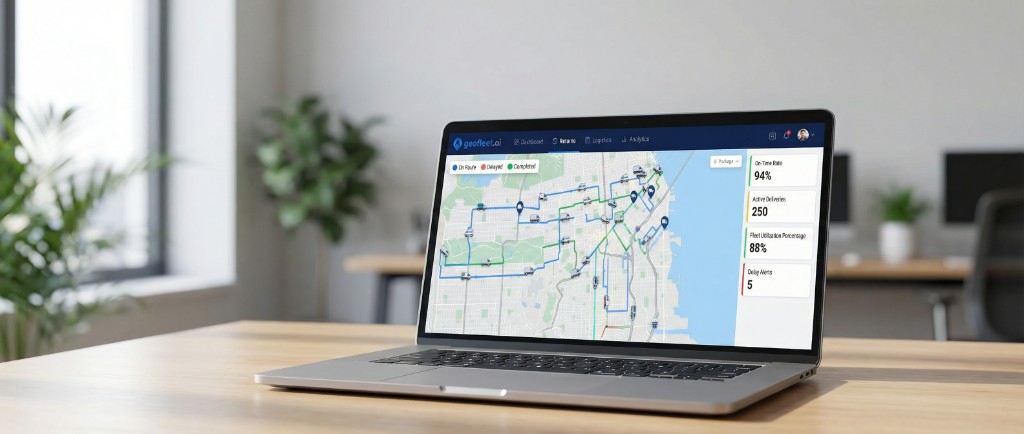
A control tower acts as the operational nerve center of your logistics system. It consolidates data from multiple sources into a single interface, giving teams complete visibility into every aspect of delivery operations.
Instead of switching between tools or relying on manual updates, teams can monitor everything in real time—from driver movement to order status and performance metrics.
- Live map showing the real-time location of all drivers and active deliveries.
- Instant updates on order status, including pickups, in-transit, and completed deliveries.
- Visibility into driver activity, availability, and workload distribution.
- Performance dashboards highlighting key metrics such as delays, success rates, and efficiency.
This centralized visibility enables faster decision-making, better coordination, and improved operational control.
From minutes to seconds
The core shift a control tower delivers is latency. Instead of learning about a missed delivery at end of shift, dispatchers see deviations as they happen and can intervene before a customer is affected.
Core Components of a Modern Control Tower
Behind the live map, a control tower that can support both people and automation is built from four layers. Missing any one of them usually means the tower stops at visibility.
- A unified operational data model across orders, drivers, and routes, rather than separate feeds stitched onto one screen.
- AI agents for routing, allocation, monitoring, and optimization that can act on that data.
- Conversational or command-based control interfaces so operators can query and direct operations quickly.
- Audit logs, governance layers, and approval workflows that keep every automated action reviewable.
The fragmentation tax
Every disconnected tool adds a handoff, and every handoff adds latency and error. The cost is not just software licenses. It is the operator hours spent reconciling systems and the decisions delayed because the full picture lives in five places at once.
Reactive vs Proactive Operations
One of the biggest advantages of fleet visibility is the shift from reactive to proactive operations. Instead of responding to issues after they occur, teams can identify and resolve problems in real time. The contrast below shows what changes day to day once a control tower is in place.
| Situation | Without visibility | With a control tower |
|---|---|---|
| Driver stuck in traffic | Found out after the miss | Reassign or re-ETA live |
| Customer asks for status | Manual calls to driver | Instant from dashboard |
| Performance review | End-of-week guesswork | Live metrics on demand |
| Compliance audit | Reconstruct from memory | Full timestamped history |
For example, if a driver is delayed due to traffic, the system can highlight the issue immediately, allowing dispatchers to reassign deliveries or update customer ETAs proactively. This reduces disruptions and improves overall service reliability.
- Detect delays and disruptions as they happen.
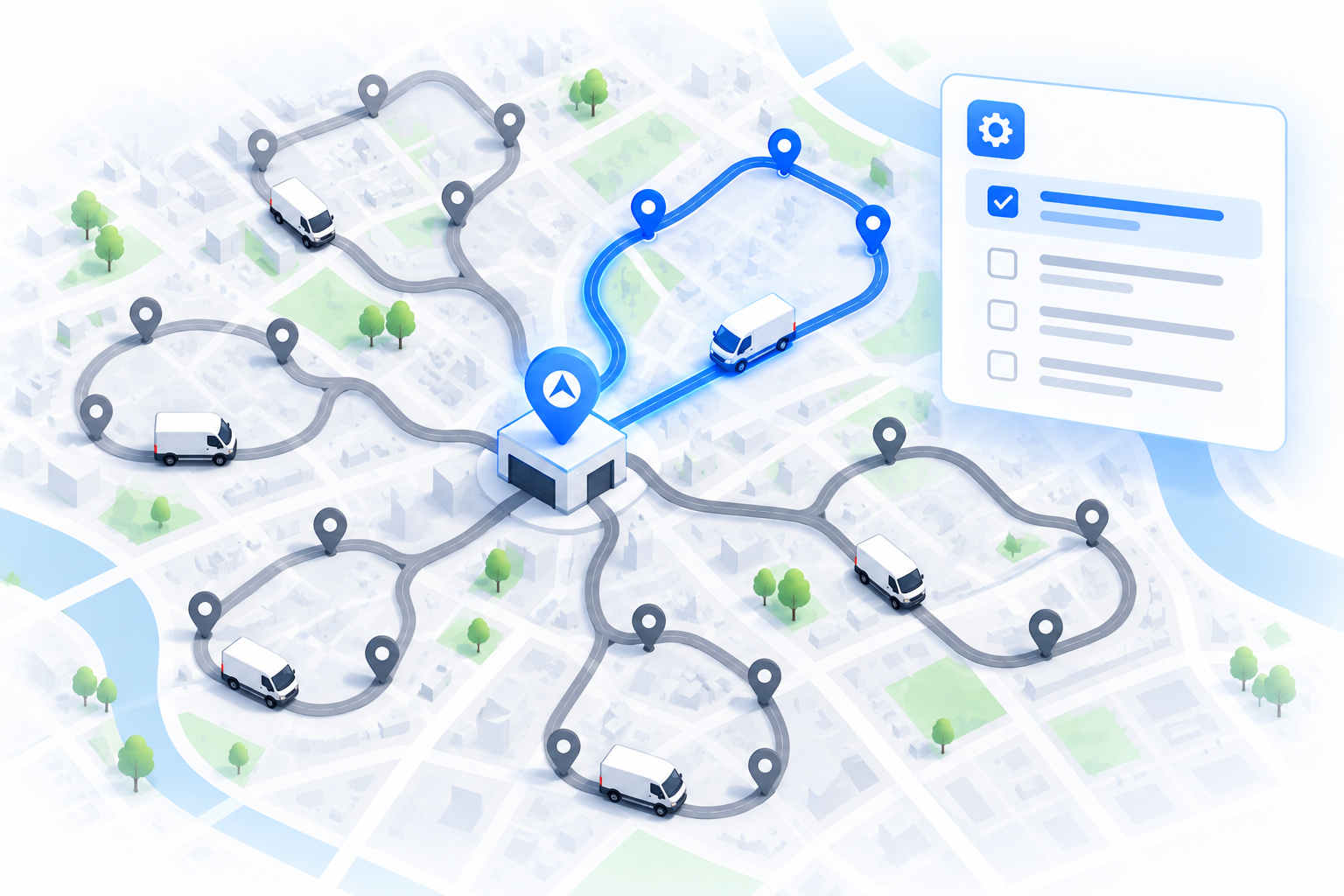
- Reassign deliveries or adjust routes in real time.
- Communicate proactively with customers.
- Reduce dependency on manual follow-ups and escalations.
From Dashboards to AI-Driven Control Towers
Proactive operations still depend on someone noticing the alert and acting on it. Traditional dashboards are built for monitoring, not execution. The next step for a control tower is to close that loop: detect the problem, decide on a response, and carry it out, with a human approving anything high-risk.
| Dimension | Traditional dashboard | AI-driven control tower |
|---|---|---|
| Primary purpose | Monitor and visualize | Decide and execute |
| Data | Often siloed per tool | Unified operational model |
| Response to issues | Alerts a human | Acts, with human oversight |
| Decision speed | Limited by manual review | Real time |
| Governance | External to the tool | Built-in audit and approval |
| Scaling | More screens, more staff | More automation |
In practice this means routine decisions such as reassigning a delayed order or re-sequencing a route can run automatically, while operators keep approval over critical actions and handle the exceptions that need judgment. The result is faster decisions, better coordination across hubs, fleets, and carriers, and a team that scales through automation rather than headcount.
Safety, Accountability, and Compliance
Fleet visibility is not just about efficiency—it also plays a critical role in safety and accountability. By tracking every movement and action, businesses can ensure that operations are conducted responsibly and transparently.
- Track complete route history and delivery timelines for every order.
- Monitor driver behavior, including idle time and route deviations.
- Identify and resolve operational issues quickly.
- Maintain detailed, audit-ready records for compliance and reporting.
This level of transparency builds trust within teams and ensures that operations remain consistent and controlled.
Seamless Integration Across Systems
A control tower is only as effective as the data it receives. Integration with other systems ensures that information flows seamlessly across the organization, eliminating silos and inconsistencies.
- Automatically sync orders from OMS, POS, or e-commerce platforms.
- Update delivery status in real time across all systems.
- Eliminate manual data entry and reduce errors.
- Ensure alignment between operations, support, and analytics teams.
This connected ecosystem ensures that everyone—from dispatchers to customer support—has access to accurate, up-to-date information.
"We moved from guessing to full visibility in just one week. It completely changed how we manage dispatch and respond to issues."
— Fleet Manager, Courier Company
What to Look For When Choosing a Control Tower
Not every tracking tool qualifies as a control tower, and many products marketed as one stop at visualization. A control tower is only as useful as its weakest layer: the data has to be unified, the automation has to be trustworthy, and the governance has to be real. When evaluating platforms, focus on the capabilities that turn visibility into action rather than a prettier map.
- Unified data: orders, drivers, and routes modeled in one place, with order-level status on the live map rather than just dots on a screen
- Action, not just alerts: configurable alerts for delays, deviations, and idle time, plus the ability to execute decisions like reassignment and rerouting
- Human-in-the-loop: configurable approval thresholds for high-risk actions
- Audit and governance: every automated decision logged and reviewable, with complete, exportable route and delivery history
- Integration breadth: two-way integration with your OMS, POS, ERP, or e-commerce systems of record
- Usability: performance dashboards and controls your dispatchers will actually use daily
Avoid the dashboard trap
Before you buy, ask the vendor to demonstrate the system taking a concrete action, such as reassigning a driver or rerouting an order, with an approval step and an audit log entry.
Final Thoughts: Visibility Is the Foundation, Action Is the Payoff
In modern logistics, visibility is no longer optional. A control tower provides the clarity and control needed to manage complex operations efficiently. By bringing all data into one place, it enables faster decisions, better coordination, and improved performance.
As operations scale, visibility alone is not enough. The teams that get the most from a control tower use it to act as well as see, automating routine decisions under human oversight so operators can focus on strategy, continuous improvement, and the exceptions that need judgment.
Frequently asked questions
What is a logistics control tower?
A logistics control tower is a centralized operations layer that consolidates live data from drivers, orders, and performance metrics into a single interface. It gives teams complete real-time visibility into delivery operations and, increasingly, the ability to act on what they see.
How is a control tower different from a dashboard?
A dashboard provides visibility: it shows what is happening and leaves the response to people. A control tower adds decision-making and execution, such as reassigning a delivery or rerouting a driver, with built-in audit and approval.
Is a control tower only for large enterprises?
No. Mid-size operations benefit too, especially once delivery volume and the number of tools in use start to grow. The earlier data, dispatch, and tracking live in one place, the less reconciliation work piles up as you scale.
Can actions in a control tower require approval?
Yes. Well-designed control towers support human-in-the-loop workflows where critical or high-risk actions, such as reassigning a batch of orders, need operator approval before they run, while routine actions can execute automatically.
How does fleet visibility reduce delays?
With live tracking, dispatchers can spot delays or route deviations as they happen and reassign deliveries or update ETAs proactively, shifting operations from reactive to proactive.
Does a control tower help with compliance?
Yes. By recording complete route history, delivery timelines, and driver activity, a control tower maintains audit-ready records for compliance and reporting.
What systems should a control tower connect to?
At minimum it should unify routing, dispatch, and tracking, and connect to your systems of record such as OMS, POS, ERP, and e-commerce platforms. A control tower is only as good as its data: the broader the integration, the more complete the picture it can act on, and the better order and delivery status stay aligned across operations, support, and analytics teams.
What is the difference between GPS tracking and a control tower?
GPS tracking shows where vehicles are. A control tower layers order status, ETAs, exceptions, and performance metrics on top of location data, turning raw tracking into decisions and actions.
How quickly can a control tower be set up?
Many teams stand up a basic live-tracking and dispatch view within days. Full value comes as you integrate order sources and tune alerts, which is typically a matter of weeks, not months.