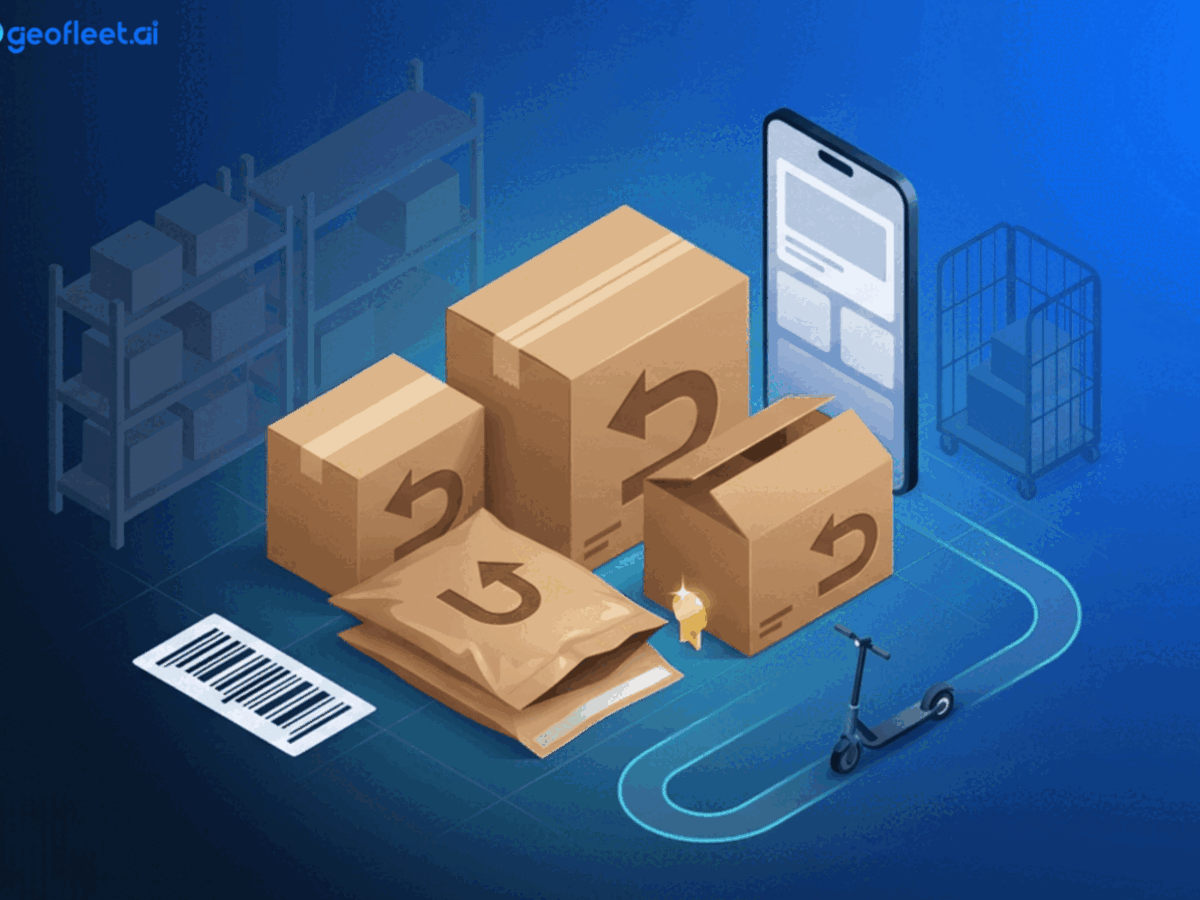
Most last-mile platforms are built around one direction of travel: from hub to customer. When you reverse that flow—collecting returned items, picking up failed deliveries, or running COD reconciliation—the assumptions baked into your routing, capacity planning, and driver workflows break down fast. The customer is now a shipper. The driver needs to inspect, accept, or reject. The timing constraints are tighter. And every exception has a cash implication that a standard delivery doesn't carry.
Reverse logistics at scale is not just an operational inconvenience—it is a revenue protection problem. Poorly handled returns inflate costs, damage customer trust, and create reconciliation gaps that are hard to close after the fact. Getting the workflows right requires treating returns as a distinct logistics product, not a variant of outbound delivery.
Why Returns Break Standard Delivery Workflows
The Direction Reversal Changes Every Assumption
In outbound delivery, the routing engine knows the item weight and dimensions at dispatch. In a return, that information is uncertain until the driver arrives and inspects. The customer may hand over a single item, multiple items, or the wrong item entirely. Load planning built on known manifests falls apart when the manifest is discovered at the door.
Dwell Time Is Longer and Less Predictable
A delivery stop averages 90–180 seconds when customers are ready. A return pickup stop averages 3–6 minutes when you factor in item inspection, condition notes, customer signature, and COD reconciliation if applicable. Scheduling return stops at delivery cadence overruns your route timings by 20–40% on mixed routes.
| Factor | Outbound delivery | Return pickup |
|---|---|---|
| Manifest | Known at dispatch | Discovered at the door |
| Dwell time | 90–180 seconds | 3–6 minutes (inspect + log) |
| Window tolerance | Forgiving | Strict — 2–3x cancel rate |
| Cash impact | Usually none | Refund or COD on every stop |
| Capacity planning | Fixed at load | Buffer 15–25% for unknowns |
"We started treating return pickups as two-minute stops. By the time we added inspection time and COD handling, every route was running 35 minutes late by stop five."
— Operations Manager, D2C Electronics Brand
Managing Pickup Windows
Customer Availability Constraints Are Stricter
A customer waiting for a delivery will tolerate a one-hour window shift. A customer who has packed an item for return and planned their day around the pickup is far less forgiving. Missed pickup windows have cancellation rates 2–3x higher than missed delivery windows across most categories. You need to set narrower windows (2-hour maximum for premium segments), communicate proactively if the driver is running late, and have a clear re-attempt policy that does not charge the customer for the first missed slot.
Attempt Limits Control Costs Without Destroying Experience
Unlimited re-attempts on returns are not economically viable. Standard practice is two driver attempts, followed by a customer-initiated drop at a collection point. Define this policy in your SLA terms and surface it at the point of return initiation—not at the second missed attempt. Customers who understand the policy upfront have significantly lower complaint rates than those who discover it mid-process.
- Set 2-hour pickup windows for residential returns, 4-hour for commercial
- Proactive SMS/push 30 minutes before driver arrival
- Two driver attempts maximum before customer self-drop option
- Clear policy disclosure at return initiation, not post-failure
- Waive first re-attempt fee for first-party logistics errors
Combining Returns with Delivery Routes
Capacity Buffering for Unknown Load
When mixing returns into outbound routes, reserve 15–25% of vehicle capacity for collected items. The actual volume is uncertain until pickup, and overloading at the first return stop cascades through the rest of the route. Set a per-vehicle return item limit in your routing configuration and flag routes that exceed it before dispatch.
Hub Cutoff Times Are Non-Negotiable
Return items collected after hub cutoff create a queuing problem in your warehouse. Items logged late delay inspection, sorting, and the downstream refund trigger. Set a hard cutoff time for returns to be checked in at the hub—typically 2–3 hours before the next outbound sort cycle. Routes that cannot complete return pickups before cutoff should have those stops moved to a dedicated return window.
- Calculate latest viable pickup time per stop based on hub cutoff
- Flag return stops that fall outside the window before route lock
- Assign overflow returns to a dedicated next-day pickup window
- Never allow a late return to delay an outbound departure
- Report cutoff compliance daily as a returns KPI
Handling COD and Refund Reconciliation
Link Refund Trigger to Physical Pickup Confirmation
The most common source of reverse logistics disputes is a refund issued before the item is physically confirmed collected, or a delay in refund after confirmed collection. Both create customer escalations. The correct architecture: the driver app captures item acceptance with a photo and serial/order number scan; the backend triggers the refund workflow automatically on confirmed acceptance. No manual step, no delay, no gap.
Refund on confirmed acceptance — automatically
Photo plus order/serial scan at the door should be the single event that fires the refund. Removing the manual step closes the dispute gap on both sides: refunds never go out before collection, and never lag behind it.
COD Cash Reconciliation
For COD returns, the driver may be collecting cash at pickup (refunding the customer in cash) or collecting the item while the refund goes back to the original payment method. Define both flows explicitly. Cash-in-hand refunds require a daily reconciliation against driver cash balances. Payment-method refunds require a confirmed pickup event to trigger the gateway credit. Mixing these flows without clear routing rules creates daily shortfalls that are painful to trace.
- Track cash refunds issued per driver per day against expected returns
- Require photo + scan at every COD return acceptance
- Trigger payment-method refund automatically within 2 hours of confirmed pickup
- Separate warranty and non-warranty return workflows—different inspection standards apply
- Reconcile driver cash balances at hub check-in, not end-of-day
Standardizing Exception Taxonomy
Why 'Customer Unavailable' Is Not a Root Cause
Lumping all failed pickups under a single exception code hides the actual distribution of problems. A customer who refused pickup because the driver arrived outside the agreed window is a different failure than a customer who simply was not home. An item refused because of packaging damage is a different failure than an item refused because the wrong order was listed. Each failure type has a different resolution path, retry logic, and cost implication.
A Practical Exception Code Framework
- NO_CONTACT: Customer not reachable within 5-minute wait period
- REFUSED_DRIVER_LATE: Customer present but refused due to window violation
- REFUSED_CONDITION: Item rejected by driver due to damage or packaging failure
- WRONG_ITEM: Item presented does not match return order
- COD_DISPUTE: Customer disputes COD amount or payment method
- LOCATION_INACCESSIBLE: Address unreachable (gated, construction, etc.)
Each code should carry a default retry policy, an escalation path, and a cost attribution. REFUSED_DRIVER_LATE should be zero-cost to the customer and trigger an internal SLA breach flag. WRONG_ITEM should pause the refund workflow and trigger a warehouse query. COD_DISPUTE should escalate to a supervisor immediately rather than allowing the driver to resolve it independently.
Related reading
Frequently asked questions
Why do returns need different workflows than deliveries?
In outbound delivery the item weight, dimensions, and manifest are known at dispatch. In a return that information is uncertain until the driver inspects at the door, dwell time is longer and less predictable, and every exception carries a cash implication that a standard delivery does not. Treating returns as a variant of outbound routing overruns route timings and creates reconciliation gaps.
How much vehicle capacity should I reserve for returns on a mixed route?
Reserve 15–25% of vehicle capacity for collected items when mixing returns into outbound routes. Actual return volume is unknown until pickup, and overloading at the first return stop cascades through the rest of the route. Set a per-vehicle return item limit and flag routes that exceed it before dispatch.
How should pickup windows for returns be set?
Use narrower windows than for deliveries—2 hours for residential returns and 4 hours for commercial. A customer who has packed an item and planned their day around the pickup is far less forgiving than one waiting for a delivery, so missed pickup windows have 2–3x higher cancellation rates. Send a proactive notification 30 minutes before arrival.
When should a return refund be triggered?
Link the refund trigger to physical pickup confirmation, not to return initiation. The driver app should capture item acceptance with a photo and order/serial scan, and the backend should trigger the refund workflow automatically on confirmed acceptance—no manual step. Refunding before collection or delaying after it are the two most common sources of reverse-logistics disputes.
How does Geofleet support reverse logistics and returns?
Geofleet supports distinct return-pickup workflows with photo and scan capture at acceptance, configurable capacity buffers and per-vehicle return limits, hub cutoff enforcement, and automatic refund triggers on confirmed collection. COD cash refunds and payment-method refunds are tracked separately so driver cash balances reconcile cleanly at hub check-in.