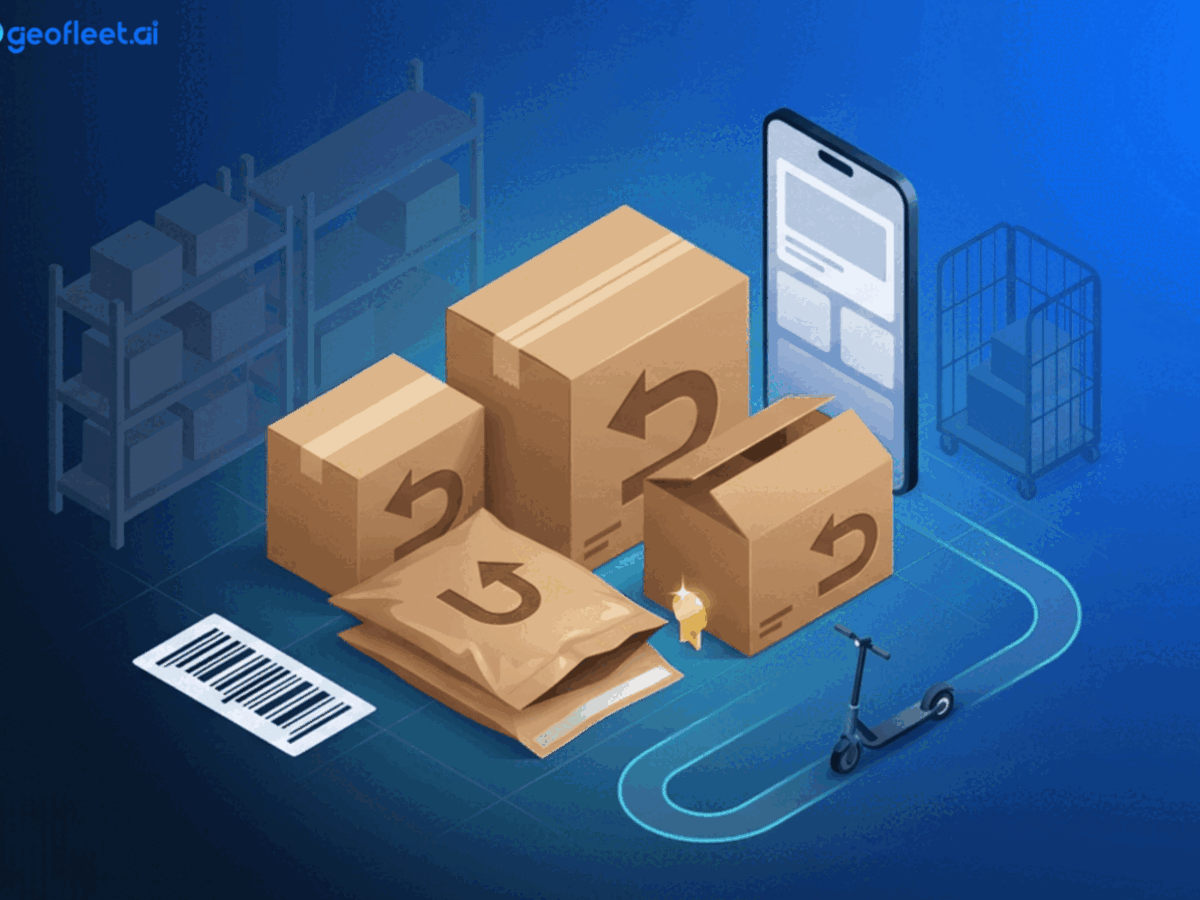
Failed deliveries are one of the most common and costly challenges in last-mile logistics. While they may appear as isolated incidents, their cumulative impact on operations, costs, and customer experience is significant.
Understanding the real cost of failed deliveries—and how to prevent them—is critical for improving efficiency and scaling logistics operations successfully.
Why Failed Deliveries Matter
Every failed delivery creates a ripple effect across logistics operations, affecting both costs and service quality.
- Increase operational costs due to re-attempts and inefficiencies
- Negatively impact customer experience and satisfaction
- Reduce overall delivery efficiency and fleet utilization
The Hidden Costs of Failed Deliveries
The true cost of a failed delivery goes beyond the immediate expense of a missed drop. It includes multiple layers of operational and financial impact.
- Additional fuel consumption and driver time for re-delivery attempts
- Increased customer support workload for handling complaints and rescheduling
- Refunds, discounts, or replacement shipments
- Loss of repeat customers and long-term revenue
In many cases, a failed delivery can cost two to three times more than a successful one when all factors are considered.
A failed drop is not a one-time cost
When you stack re-delivery fuel and driver time, added support workload, refunds or replacements, and the risk of losing the customer, a single failure routinely costs two to three times a successful delivery.
| Cost layer | What it includes | Who absorbs it |
|---|---|---|
| Re-delivery | Fuel, driver time, vehicle wear | Operations |
| Support | Calls, rescheduling, complaints | Customer service |
| Goods | Refunds, replacements, spoilage | Finance |
| Churn | Lost repeat orders, bad reviews | Revenue |
Common Causes of Failed Deliveries
Most delivery failures are not random—they are caused by identifiable issues that can be addressed with better systems and processes.
- Unclear or inaccurate ETAs leading to missed deliveries
- Incomplete or incorrect address details
- Lack of real-time communication between drivers and customers
- Insufficient proof of delivery or verification processes
How to Reduce Failed Deliveries
Improving first-attempt delivery success requires a combination of better visibility, communication, and operational processes.
- Provide accurate ETAs and real-time delivery tracking for customers
- Enable direct communication between drivers and customers
- Capture proof of delivery with photos, signatures, and timestamps
- Use analytics to identify failure patterns and optimize operations
Key Metrics to Track
Tracking the right metrics helps identify inefficiencies and measure improvements over time.
- First-attempt delivery success rate
- Cost per delivery and cost per failed attempt
- Customer complaint and support ticket volume
- Re-delivery rate and turnaround time
How Geofleet Helps Reduce Delivery Failures
Geofleet provides tools that improve delivery accuracy, communication, and accountability across the entire delivery lifecycle.
- Real-time tracking with accurate and predictive ETAs
- Driver-to-customer communication features
- Proof of delivery with photos and digital signatures
- Analytics dashboards to monitor and reduce failure rates
"Improving tracking and proof of delivery significantly increased our first-attempt success rate."
— COO, multi-city QSR brand
The Long-Term Impact of Reducing Failed Deliveries
Reducing failed deliveries has a compounding effect on logistics performance. It lowers costs, improves efficiency, and strengthens customer relationships.
Businesses that invest in improving delivery success rates gain a competitive advantage through better service quality and operational scalability.
Ultimately, reducing failed deliveries is not just about cost savings—it is about building a reliable and efficient logistics operation that customers trust.
Related reading
Frequently asked questions
How much does a failed delivery actually cost?
When you account for re-delivery fuel and driver time, extra support workload, refunds or replacements, and lost repeat customers, a failed delivery can cost two to three times more than a successful one.
What are the most common causes of failed deliveries?
The leading causes are inaccurate ETAs, incomplete or incorrect addresses, lack of real-time driver-to-customer communication, and insufficient proof of delivery or verification.
How can I improve first-attempt delivery success?
Provide accurate ETAs and real-time tracking, enable direct driver-to-customer communication, capture proof of delivery, and use analytics to identify and fix recurring failure patterns.
Which metrics should I track to reduce delivery failures?
Monitor first-attempt success rate, cost per delivery and per failed attempt, complaint and support ticket volume, and re-delivery rate and turnaround time.
What is a good first-attempt success rate to target?
Strong last-mile operations typically push first-attempt success well above 90 percent. The right target depends on your sector, but any sustained slide below your historical norm signals a process problem to investigate.
Are failed deliveries mostly the driver's fault?
Rarely. Most failures trace back to systemic gaps such as inaccurate ETAs, bad address data, or no way for the customer and driver to coordinate, all of which are fixable with the right tools.