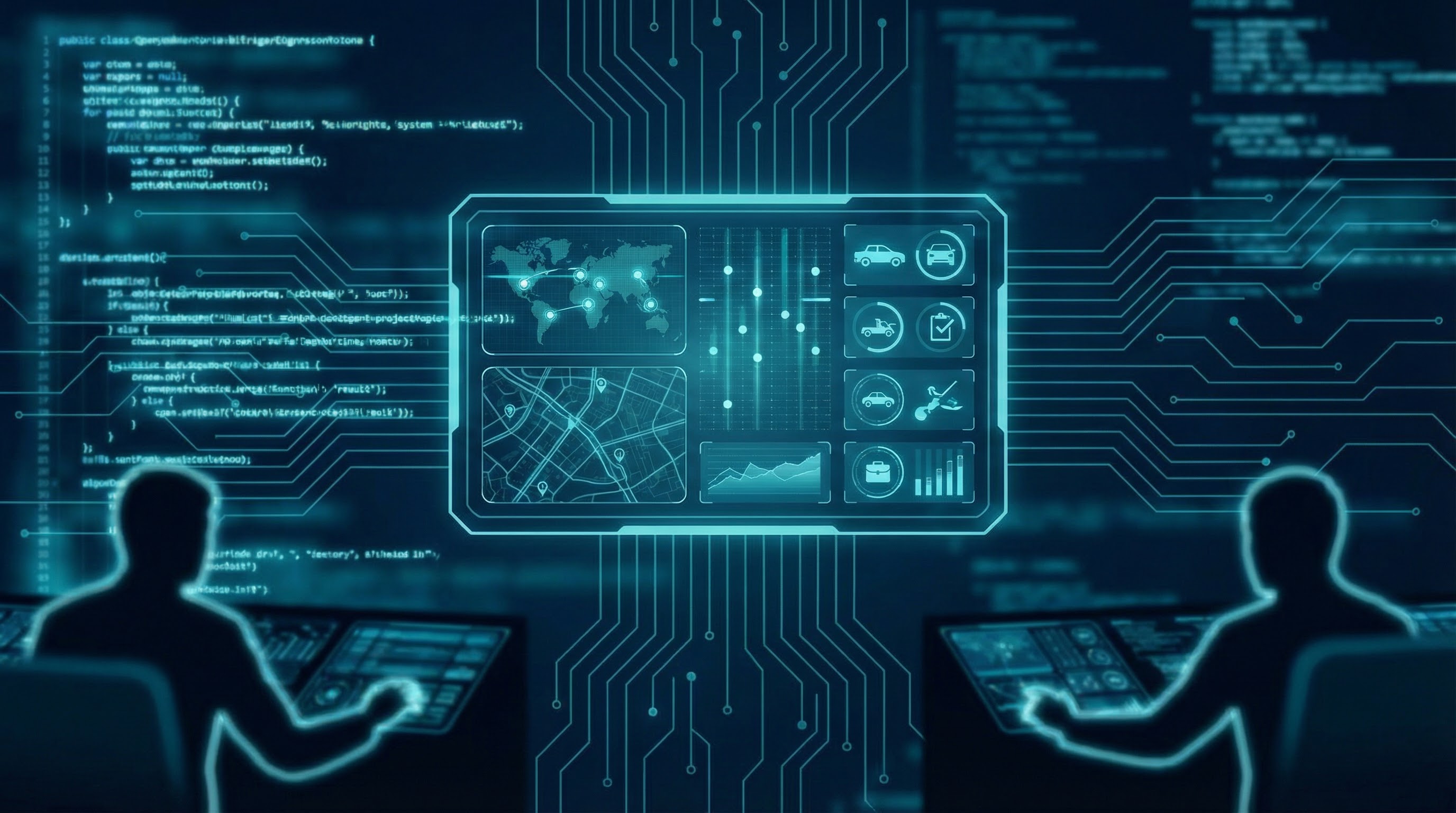
AI dispatch replaced multiple full-time dispatchers with zero errors
Growing delivery fleet
The challenge
Manual dispatch no longer scaled. Assignments were suboptimal and response times were too slow during peak periods.
The solution
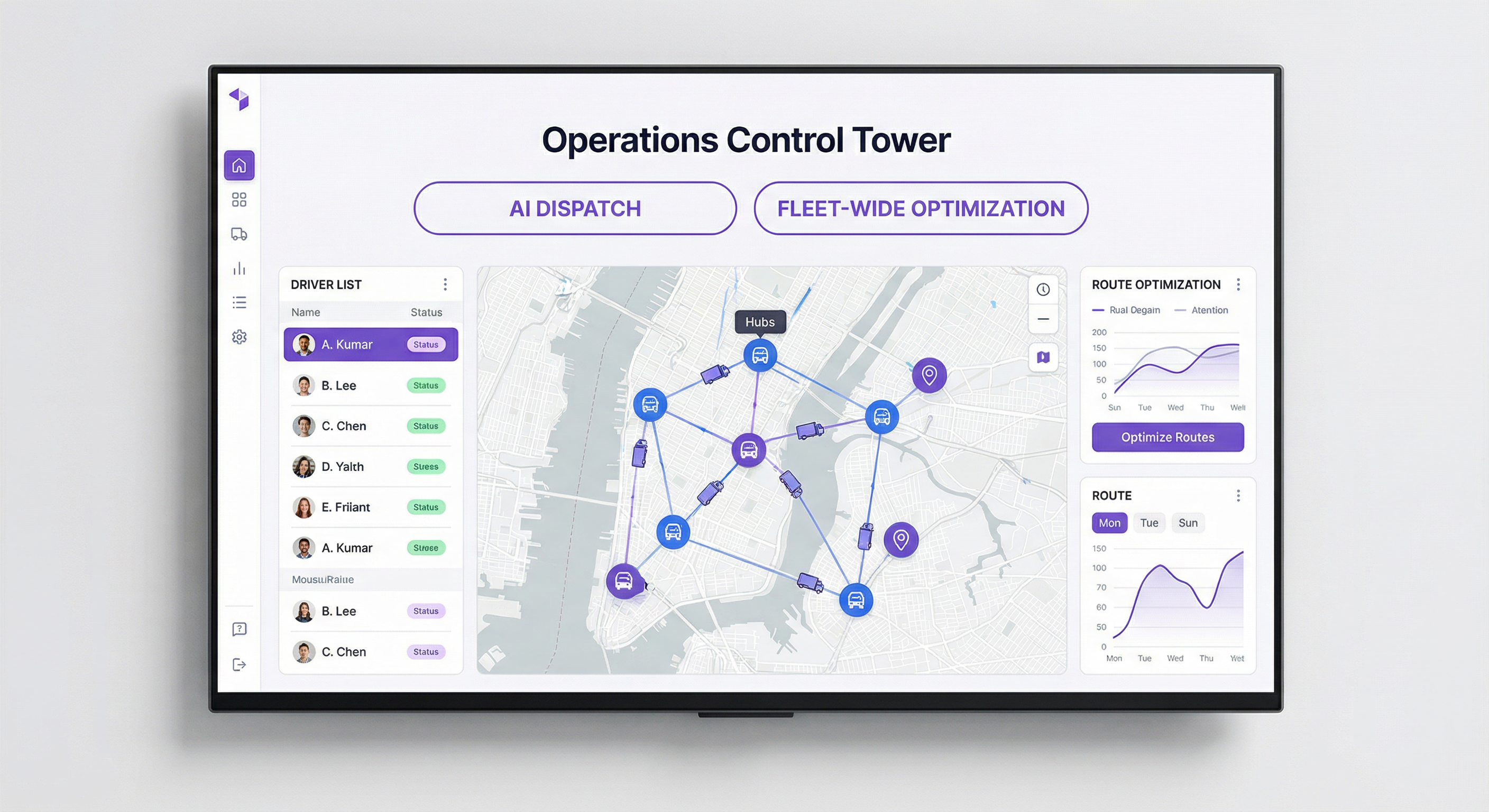
Geofleet’s AI Dispatch Agent assigns every order using real-time signals — location, capacity, time windows, and traffic. Dispatchers can override when needed, and the system learns from feedback.
Background
A fast-growing delivery fleet had scaled to the point where manual dispatch was the main bottleneck. Multiple full-time dispatchers were still unable to keep up during peak hours; assignments were often suboptimal (wrong driver, wrong route), and response time from order receipt to assignment was too slow. The company wanted to maintain quality while reducing dependency on manual dispatch.
Approach
Geofleet’s AI Dispatch Agent was deployed to assign every incoming order using real-time signals: driver location, current load, time windows, and live traffic. The system proposed assignments in seconds; dispatchers could override when needed and the AI learned from corrections. Within a month, the team moved to auto-dispatch for routine orders and kept manual override for exceptions.
Results
Manual dispatch effort dropped by about 90%. The AI made better assignments than the previous manual process, and the first month saw zero reported dispatch errors (wrong order, wrong driver, or missed time window). Time from order to assignment improved by 4x, and the company was able to reallocate several full-time dispatchers to customer success and exception handling.
Critically, the gains were not capacity-bound. The same automated dispatch that handled today’s volume could absorb growth without the company hiring and training another dispatcher for every step-up in orders.
Why it mattered
Manual dispatch had become the ceiling on growth. Every increase in order volume demanded more dispatchers, and even then peak-hour assignments lagged and quality slipped. Removing that bottleneck meant the business could scale order volume without scaling its back office at the same rate — the single biggest unlock for a fast-growing fleet.
Zero dispatch errors also had a downstream effect: fewer misassignments meant fewer late deliveries, fewer customer complaints, and less rework, compounding the operational savings.
What changed for the team
Dispatchers shifted from heads-down, order-by-order assignment to managing the operation by exception — handling the unusual cases the AI flagged and focusing on customers. Several were moved into customer success and exception handling, where their operational knowledge added more value than manual assignment ever could.
Trust built gradually thanks to the staged rollout: advisory mode let the team see the AI’s suggestions and corrections before handing over routine assignment, and the override and audit trail meant a human could always step in and see why a decision was made.
Dispatch performance
Before vs after AI Dispatch Agent
| Metric | Before | After |
|---|---|---|
| Manual dispatch effort | 100% | ~10% |
| Dispatch errors (Month 1) | Occasional | 0 |
| Order-to-assignment time | ~8 min | ~2 min |
| Full-time dispatchers (equivalent) | Multiple | Reallocated |
Operational impact
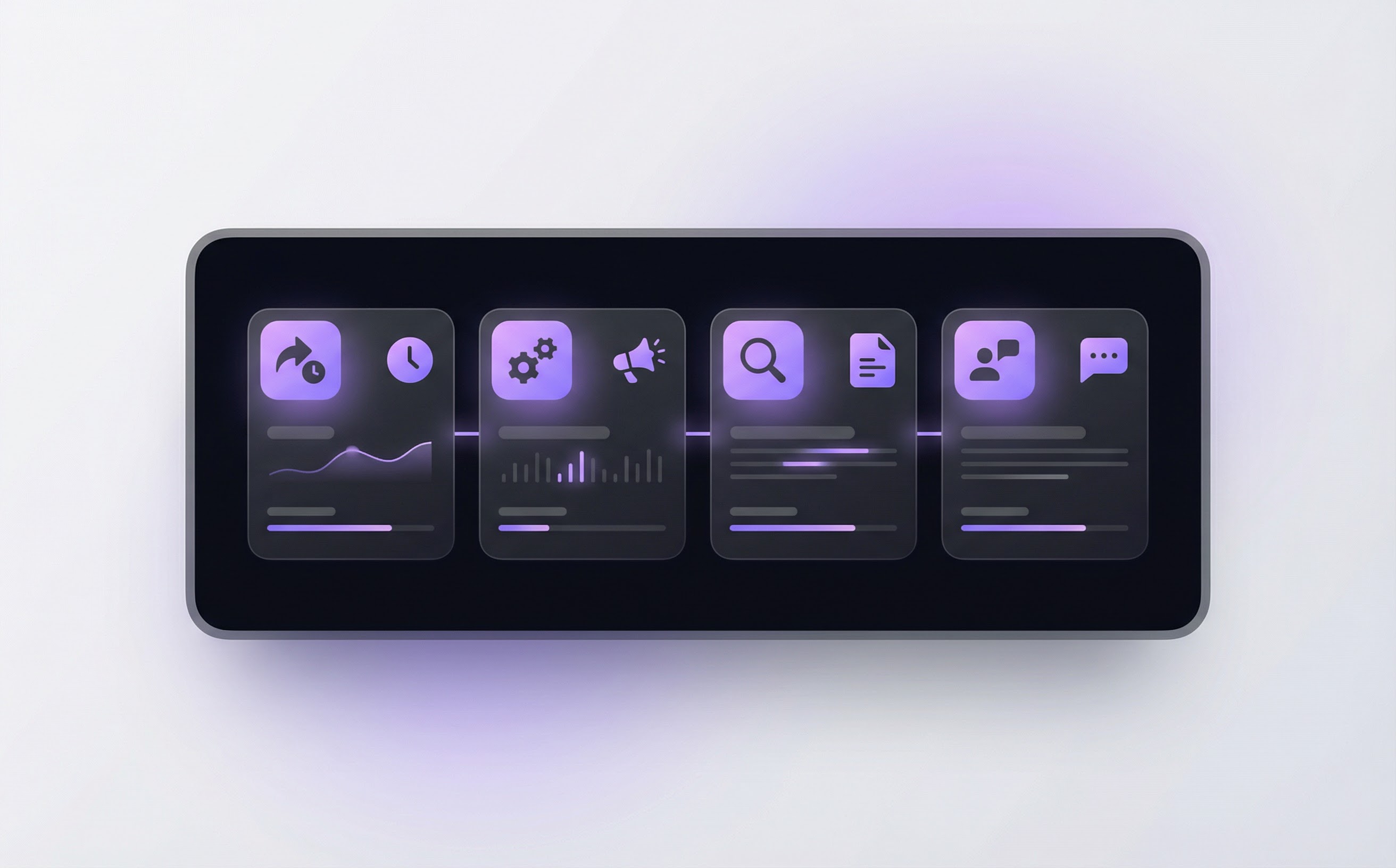
Implementation timeline
Order and driver data connected; business rules (zones, time windows, capacity) configured.
AI suggests assignments; dispatchers approve or override; system learns.
Routine orders auto-assigned; manual override for exceptions only.
Continuous learning; dispatcher headcount reallocated.
Key takeaways
- AI Dispatch Agent reduced manual dispatch effort by ~90% while improving assignment quality.
- Zero dispatch errors in the first month; order-to-assignment time improved by 4x.
- Dispatchers were reallocated to customer success and exception handling instead of routine assignment.
- Override and audit logs preserved control and trust while scaling automation.
- Automated dispatch removed the main growth bottleneck, letting order volume scale without scaling the back office.
Frequently asked questions
What does the AI Dispatch Agent actually do?
It assigns every incoming order to the best driver using real-time signals — driver location, current load, committed time windows, and live traffic — and proposes the assignment in seconds. Dispatchers can override any decision, and the system learns from those corrections over time.
Did AI dispatch eliminate dispatcher jobs?
No — it eliminated the routine, repetitive part of the work. Manual dispatch effort fell about 90%, and the dispatchers were reallocated to higher-value roles in customer success and exception handling rather than being let go.
How did the fleet achieve zero dispatch errors in month one?
By assigning orders from consistent real-time data instead of memory and phone calls, the AI avoided the wrong-driver, wrong-order, and missed-time-window mistakes common to manual dispatch. The first month after go-live saw zero reported dispatch errors.
Is it safe to let AI assign every order?
The rollout was deliberately staged: the AI first ran in advisory mode where dispatchers approved or overrode each suggestion, then moved to auto-dispatch for routine orders with manual override kept for exceptions. Override and audit logs preserved human control throughout.
How fast did orders get assigned compared to before?
Order-to-assignment time improved roughly 4x, from about eight minutes to about two. That speed is what let the fleet keep up during peak hours, which had been the main bottleneck under manual dispatch.
"The AI dispatch agent replaced several full-time dispatchers and makes better assignments. We saw zero dispatch errors in the first month."
Logistics · Couriers & Logistics
Related case studies
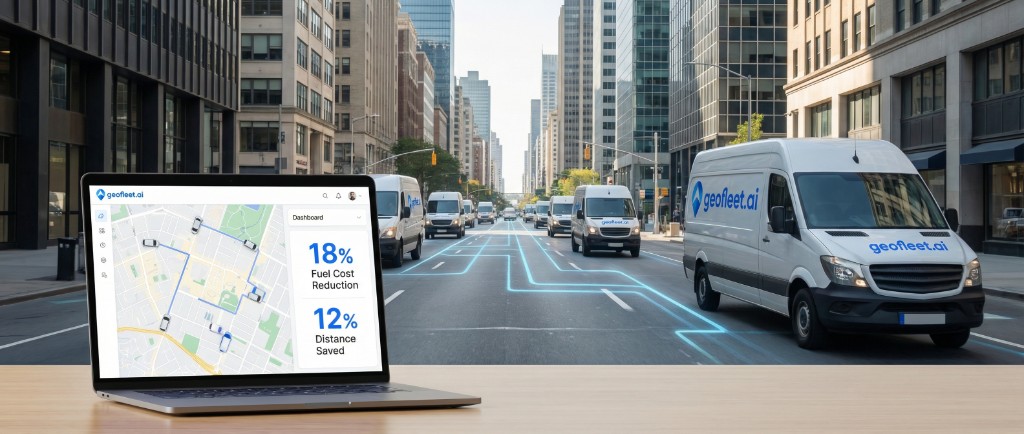
30% fuel savings and 40% more stops per driver

80% fewer delivery disputes with ePOD and AI validation

80% less route planning time, 97% on-time delivery
Get similar results
See how Geofleet can help your team. Start free or book a tailored demo.