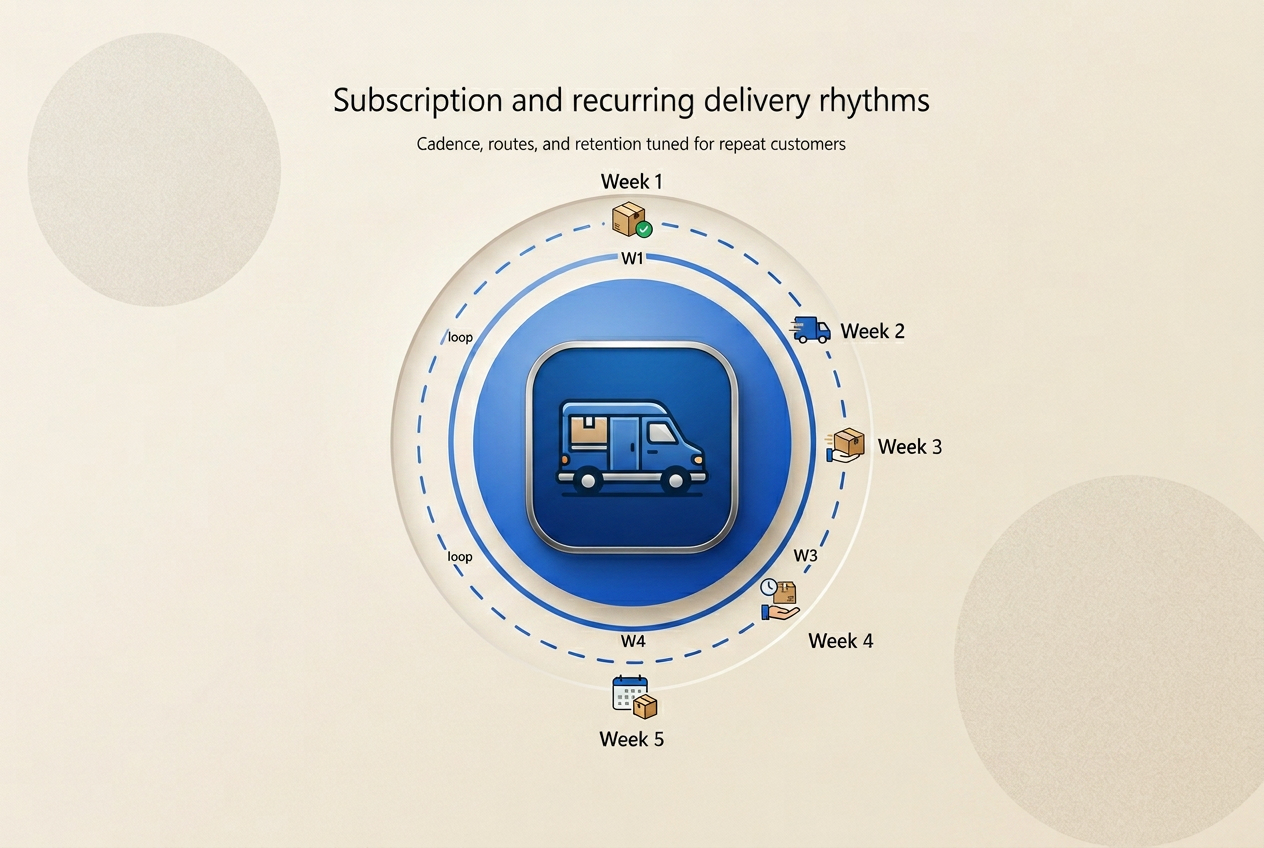
Subscription-based delivery models are built on one fundamental promise: consistency. Unlike one-time orders, where the customer experience is evaluated once, subscription deliveries are evaluated repeatedly over time. Each delivery reinforces—or weakens—the customer’s trust in your service. This makes subscription logistics less about speed and more about reliability, predictability, and operational discipline.
As businesses scale their subscription offerings—whether in milk delivery, water supply, groceries, or B2B replenishment—the complexity of managing recurring orders increases significantly. Customer schedules vary, delivery frequencies differ, and operational constraints such as vehicle capacity and driver availability must be carefully balanced. Without structured systems, this complexity can quickly lead to missed deliveries, inefficiencies, and declining customer satisfaction.
- Customers expect deliveries at consistent times and days.
- Missed or delayed deliveries reduce trust and increase churn.
- Errors in recurring orders compound over time.
- Manual management becomes inefficient as volume grows.
To succeed, businesses must treat subscription delivery as a system-driven operation rather than a series of individual tasks.
Why Subscription Routes Are Fundamentally Different
Subscription delivery routes are not dynamic in the same way as on-demand deliveries. While optimization is still important, maintaining consistency is equally critical. Customers expect their deliveries to arrive at predictable times, often with the same driver and within a familiar time window.
This introduces a unique challenge: optimizing routes without disrupting established patterns. Over-optimization can lead to changes in delivery timing, which may negatively impact customer experience.
- Fixed delivery days and time slots must be honored consistently.
- The same customers are served repeatedly over long periods.
- Routes must balance efficiency with predictability.
- Driver familiarity with routes can improve speed and accuracy.
The goal is to create stable, repeatable routes that can still adapt to operational changes when necessary.
Optimize the base, not every stop
For subscription routes, resist the urge to re-optimize daily. Lock in stable, efficient base routes and only adjust for skips, pauses, and new sign-ups. Familiarity is itself a performance feature here.
Subscription vs On-Demand Delivery
Subscription and on-demand models pull in different directions. Understanding the contrast helps you set the right priorities and avoid managing recurring orders as if they were one-off jobs.
| Dimension | Subscription | On-demand |
|---|---|---|
| Top priority | Consistency | Speed |
| Route stability | High, repeatable | Re-optimized daily |
| Customer expectation | Same time, same day | As fast as possible |
| Planning horizon | Weeks ahead | Minutes ahead |
| Churn driver | Missed schedules | Slow delivery |
Key Requirements for Efficient Subscription Routing
Managing subscription deliveries effectively requires a structured approach to routing and planning. Unlike one-time deliveries, where each route is planned independently, subscription routes must be designed for long-term repeatability.
- Maintain consistent recurring time windows for each customer.
- Batch deliveries by geographic area to minimize travel time.
- Handle skips, pauses, and reschedules automatically.
- Assign vehicles based on expected load and delivery volume.
- Ensure flexibility to accommodate new or changing subscriptions.
These requirements ensure that operations remain efficient while meeting customer expectations for consistency.
How Geofleet Simplifies Subscription Delivery Operations
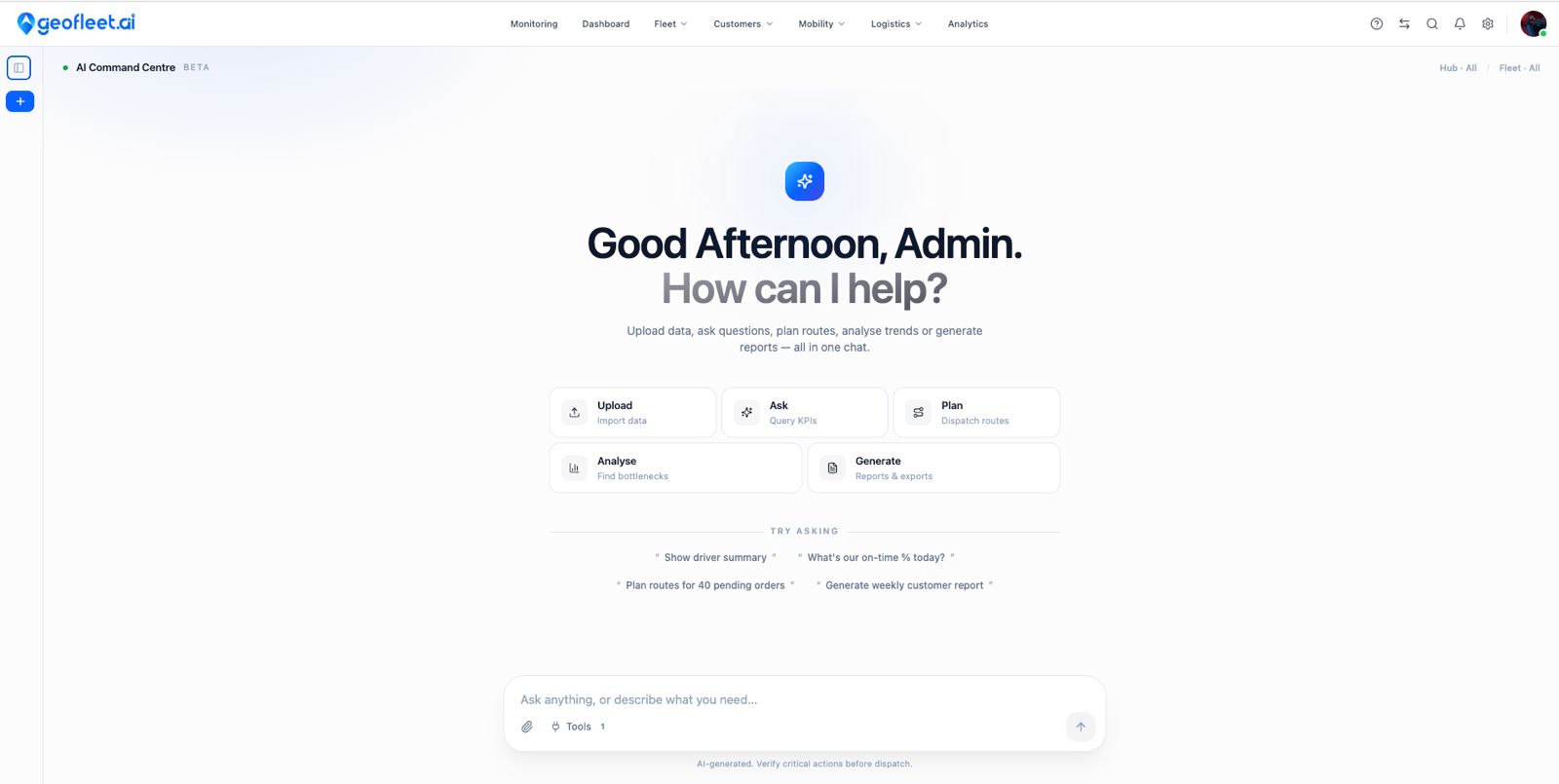
Geofleet enables businesses to manage recurring deliveries at scale by automating planning, routing, and execution. Instead of manually managing subscription lists and schedules, teams can rely on the system to generate optimized delivery plans automatically.
- Automatically sync recurring orders from CRM, billing, or subscription systems.
- Identify delivery frequency such as daily, weekly, or monthly schedules.
- Optimize routes based on date, location, and delivery density.
- Provide clear daily delivery plans for dispatchers and drivers.
- Adapt to changes such as skipped deliveries or new subscriptions in real time.
This automation reduces operational complexity while ensuring that deliveries remain consistent and reliable.
What Operations Managers Really Care About
From an operational perspective, the success of subscription delivery is measured by reliability, efficiency, and scalability. Managers must ensure that operations run smoothly without increasing workload or compromising service quality.
- Reducing “Where is my order?” (WISMO) calls through consistent delivery.
- Avoiding missed, duplicate, or incorrect deliveries.
- Maximizing driver utilization without overloading routes.
- Maintaining visibility and control through centralized dashboards.
Achieving these outcomes requires a combination of structured planning and real-time visibility.
"We used to spend hours managing subscription lists manually. Now everything is automated—routes are ready every day, and we simply review and dispatch."
— Operations Manager, Water Delivery Company
How to Get Started with Subscription Delivery Optimization
Implementing a subscription delivery model does not need to be complex. By starting with a focused approach and scaling gradually, businesses can build a reliable and efficient system.
- Define your subscription products and delivery frequency clearly.
- Map customer locations and group them into logical delivery zones.
- Sync subscription data with your delivery or order management system.
- Start with one region or route to validate the model.
- Monitor performance and optimize routes continuously.
This phased approach ensures stability while allowing continuous improvement.
Final Thoughts: Consistency Drives Retention
Subscription delivery is not just an operational model—it is a long-term relationship with your customers. Every successful delivery reinforces trust, while every failure increases the risk of churn.
By focusing on consistency, automation, and efficient routing, businesses can create a delivery experience that customers rely on and value. Over time, this reliability becomes a competitive advantage, driving higher retention and stronger customer lifetime value.
Related reading
Frequently asked questions
Why are subscription delivery routes different from on-demand routes?
Subscription routes prioritize consistency over speed. Customers expect deliveries at predictable times and days, so routes must balance efficiency with stable, repeatable patterns rather than constant reoptimization.
How do I handle skips, pauses, and reschedules?
Use a system that automatically adjusts recurring delivery plans when customers skip, pause, or reschedule, so daily routes always reflect the current subscription state without manual edits.
How does automation help subscription deliveries?
Automation syncs recurring orders from CRM or billing systems, identifies delivery frequency, optimizes routes by date and location, and generates daily delivery plans so teams simply review and dispatch.
Why is consistency so important for retention?
Subscription deliveries are evaluated repeatedly, and every missed or inconsistent delivery erodes trust. Reliable execution directly protects customer lifetime value and reduces churn.
How is subscription routing different from on-demand routing?
On-demand routing optimizes each day from scratch for speed. Subscription routing favors stable, repeatable runs so customers get familiar drivers and consistent windows, optimizing without disrupting expectations.
Can one fleet handle both subscription and on-demand orders?
Yes. Many operations run recurring subscription routes as a stable base and layer on-demand orders into spare capacity, provided the platform can manage both planning models together.